

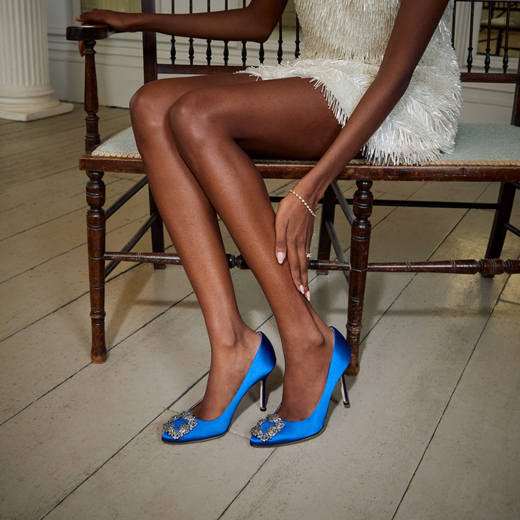

Think of your favourite pair of high heels and how beautiful, confident, and sexy you feel wearing them. Have you ever wondered about their history? It might be hard to imagine, but high heels were once a symbol of masculinity, power, and status. Long before heels became a staple of women’s fashion, they were worn by Persian warriors riding into battle on horseback. Quite a different image from the one we associate with high heels today.
The history of high heels stretches back centuries, long before stilettos, red carpets, or designer shoe collections. Although their exact origins remain uncertain, heeled footwear was used by horsemen in Persia to help them keep their feet secure in stirrups, providing stability when standing to shoot arrows. While we sometimes struggle to make it through an evening in our favourite heels, Persian cavalrymen relied on theirs on the battlefields.
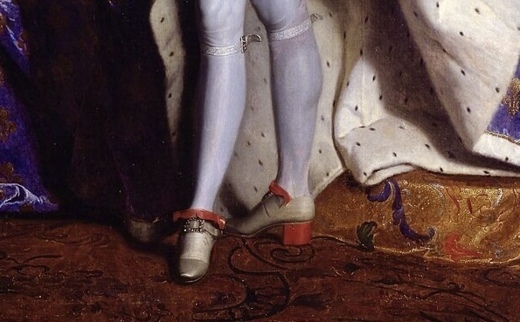
King Louis XIV of France – red heel shoes
By the beginning of the 17th century, European aristocrats had taken an interest in Persian culture and heeled shoes began appearing in fashionable European circles. Associated with powerful cavalrymen, heels became symbols of masculinity, strength, and social status. Wealthy gentlemen embraced increasingly elaborate footwear, partly because wearing something impractical demonstrated that they had no need to perform physical labour. Uncomfortable shoes have been a status symbol for an extraordinarily long time.
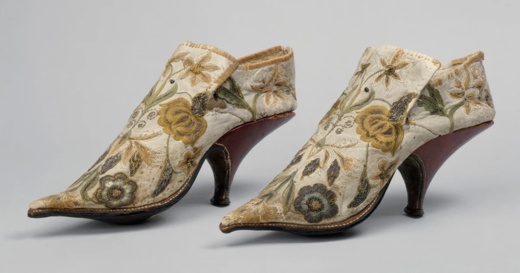
1890-1700 French silk and leather men’s shoes -photo The Metropolitan Museum of Art
One of the most famous high heels enthusiasts was King Louis XIV of France, who favoured shoes with bright red heels. At his court, red heels signified political privilege and access to royal circles, making footwear an unmistakable statement of power and only the ones who were most important were allowed to wear red heels. Imagine needing the right social connections just to choose the colour of your shoes. Centuries later, red would once again become associated with luxury through Christian Louboutin’s iconic red sole shoes. It’s interesting how a simple colour can carry such powerful associations across generations.

Women also began adopting heels during the 17th century, initially borrowing elements from men’s fashion but over time the styles evolved in different directions. Men’s heels slowly became broader and sturdier, while women’s became increasingly higher, decorative, and refined. By the 18th century, European men’s fashion was moving toward simpler, more practical clothing and elaborate high heels gradually disappeared from everyday masculine wardrobes. Women’s heels, meanwhile, continued their own evolution and kept changing with fashion trends and social attitudes.
By the 1950s, advances in shoemaking technology helped popularize the modern stiletto, with designers such as Roger Vivier revolutionizing the evolution of shoe design and transforming practical shoes into a sculptural art form. The slender heel created a dramatic silhouette, changing posture and emphasizing the legs. Throughout the following decades, designers such as Manolo Blahnik and Christian Louboutin transformed high heels into luxury accessories. Today, heels range from classic pumps and platforms to architectural runway creations, while contemporary fashion continues to challenge traditional ideas about gender and personal expression.
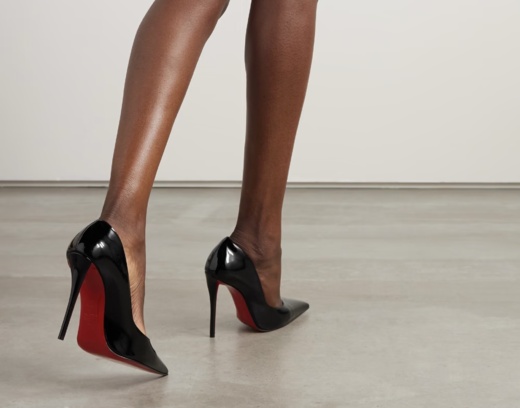
Christian Louboutin Miss Z 100 patent-leather pumps
For anyone curious to explore footwear history further, Toronto’s Bata Shoe Museum is well worth a visit. Founded by Sonja Bata, the museum houses an extraordinary collection of historical and contemporary footwear, with fascinating exhibitions that explore the relationship between shoes, culture, and society. There is also an interesting connection to the former Czechoslovakia, as the Bata shoe company was founded in 1894 by Tomáš Baťa and his siblings in Zlín, now part of the Czech Republic. With its permanent collection and continually changing exhibitions, it is one of those Toronto museums where there is always something interesting to discover.
So, the next time you put on your favourite pair of high heels, remember their fascinating history. What began as practical footwear for horsemen eventually became a symbol of power, wealth, femininity, and personal expression. Let us face it, surviving an entire night in high heels still makes you a bit of a warrior.
Stay in the loop with exclusive news, stories, and insights—delivered straight to your inbox. No fluff, just real content that matters. Sign up today!