


Connect with us

Subscribe

Subscribe

Health & Wellness

Repeated exposure is shaping your taste preferences

“The profits earned by making people unhealthy are ill-gotten gains.”

Photo Courtesy of Fishy Fishy

Have North Americans become accustomed to excessively sweetened beverages? That is my theory after hosting guests from both Europe and Asia recently. Without exception, upon taking a sip of bottled iced tea, they remark on how sugary it is. One child declared it tasted like syrup.

It is no small concern that North Americans have come to prefer sweeter foods and beverages. We also tend to go for colder drinks, not those at room temperature, and that is not helping. It is a lesser-known fact that cold temperatures reduce the perception of sweetness. The colder the drink, the less sweet it seems. At corner stores where people shop for refreshment, it is no small challenge to find selections not full of sugar.

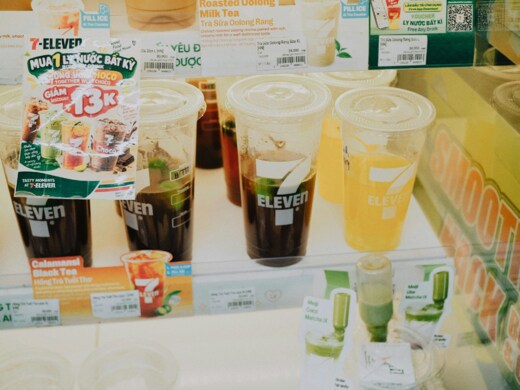
I have been in enough convenience stores around the world to be frustrated at what they offer in this part of the world. Zero nutrition. Garbage drinks, candy, chips, and fatty fast food.

In a typical North American convenience store, stretches of refrigerated space are given over to soft drinks, sweetened iced teas, sports drinks, energy drinks, fruit drinks, and flavoured beverages. Fifty per cent of the store may seem like an exaggeration, but it is not far off, and the other half contains chips, candy and other highly processed food.

By contrast, a convenience store in Japan offers a vastly unique experience. You will find some sweetened drinks, but you will also find an astounding assortment of unsweetened green tea, barley tea, oolong tea, black coffee, sparkling water, and plain water. Unsweetened tea is a regular beverage.

It is a public health disaster that the North American beverage environment has become saturated with sweetness, and we should do some finger pointing, because taste is trainable.

If someone gets sickly sweet drinks often enough, that level of sweetness becomes familiar. Reduce the sweetness and, for a while, the drink may seem tasteless, but the palate adapts. What is astonishingly sweet to a child visiting from afar can become unremarkable to a local who has been drinking it for years.

We have become accustomed to beverages that are liquid candy. The consequences involve high caloric intake and increased risk of obesity, type 2 diabetes, dental cavities, and everything that follows from these gateway diseases.

Consumers need to get angry. Why should we have to navigate aisles filled with brightly packaged sugar water before finding plain water or unsweetened tea? Why should we have to decipher labels only to discover that the beverage is loaded with sugar? Why, when governments are spending enormous sums dealing with obesity, diabetes and dental disease, are we so reluctant to challenge an industry that profits from selling the products that contribute to those problems?

I would like to see thousands of consumers join me in writing to the chief executives of the big beverage companies and convenience store chains, and to government regulators, too. For their absence of care, I have a strong message: shame on you!

We all should change our habits of our own initiative. Do not buy those awful drinks. The far better choice comes freely out of our faucets. Drink good old-fashioned water. Make your own unsweetened tea. Drink your coffee black.

To the beverage executives, I will add more scorn. You know exactly how much sugar you are putting into these products. You know that taste preferences can be shaped by repeated exposure. You know your customers include children who have not yet learned to question what they are drinking.

This column offers opinions on health and wellness, not personal medical advice.

Newsletter Signup

Stay in the loop with exclusive news, stories, and insights—delivered straight to your inbox. No fluff, just real content that matters. Sign up today!


Dr. W. Gifford-Jones, MD is a graduate of the University of Toronto and the Harvard Medical School. He trained in general surgery at Strong Memorial Hospital, University of Rochester, Montreal General Hospital, McGill University and in Gynecology at Harvard. His storied medical career began as a general practitioner, ship’s surgeon, and hotel doctor. For more than 40 years, he specialized in gynecology, devoting his practice to the formative issues of women’s health. In 1975, he launched his weekly medical column that has been published by national and local Canadian and U.S. newspapers. Today, the readership remains over seven million. His advice contains a solid dose of common sense and he never sits on the fence with controversial issues. He is the author of nine books including, “The Healthy Barmaid”, his autobiography “You’re Going To Do What?”, “What I Learned as a Medical Journalist”, and “90+ How I Got There!” Many years ago, he was successful in a fight to legalize heroin to help ease the pain of terminal cancer patients. His foundation at that time donated $500,000 to establish the Gifford-Jones Professorship in Pain Control and Palliative Care at the University of Toronto Medical School. At 93 years of age he rappelled from the top of Toronto’s City Hall (30 stories) to raise funds for children with a life-threatening disease through the Make-a-Wish Foundation.  Diana Gifford-Jones, the daughter of W. Gifford-Jones, MD, Diana has extensive global experience in health and healthcare policy.  Diana is Special Advisor with The Aga Khan University, which operates 2 quaternary care hospitals and numerous secondary hospitals, medical centres, pharmacies, and laboratories in South Asia and Africa.  She worked for ten years in the Human Development sectors at the World Bank, including health policy and economics, nutrition, and population health. For over a decade at The Conference Board of Canada, she managed four health-related executive networks, including the Roundtable on Socio-Economic Determinants of Health, the Centre for Chronic Disease Prevention and Management, the Canadian Centre for Environmental Health, and the Centre for Health System Design and Management. Her master’s degree in public policy at Harvard University’s Kennedy School of Government included coursework at Harvard Medical School.  She is also a graduate of Wellesley College.  She has extensive experience with Canadian universities, including at Carleton University, where she was the Executive Director of the Global Academy. She lived and worked in Japan for four years and speaks Japanese fluently. Diana has the designation as a certified Chartered Director from The Directors College, a joint venture of The Conference Board of Canada and McMaster University.  She has recently published a book on the natural health philosophy of W. Gifford-Jones, called No Nonsense Health – Naturally!

Click to comment

Leave a Reply

Your email address will not be published. Required fields are marked *

Trending

Nathan Haddad: The creative mind behind the image

Fashion

Asun “Ace” Eastwood: Toronto’s Belizean Visionary

Classic Man

Canada’s Ukraine deal raises questions about priorities

News & Views

Adults with Autism deserve a city designed with them in mind

Health & Wellness

Advertisement
241600
Newsletter Signup

Stay in the loop with exclusive news, stories, and insights—delivered straight to your inbox. No fluff, just real content that matters. Sign up today!

Legal and Advertising Disclaimer: Advertisements, sponsored content, business listings and other promotional materials are supplied by third parties. Their publication does not constitute an endorsement, recommendation, representation, warranty or guarantee by TCN Now Inc. Advertisers and content providers are responsible for the accuracy, legality and substantiation of their claims and for obtaining all necessary copyright, trademark, privacy and other permissions. To the fullest extent permitted by law, TCN Now Inc., its directors, officers, employees, contractors and affiliates shall not be liable for any loss, damage, cost, expense or claim arising from third-party advertisements, products, services or promotional content. TCN Now Inc. reserves the right to refuse, edit, suspend or remove advertising or promotional content at its discretion. Editorial and Content Disclaimer: The opinions, commentary and viewpoints expressed in signed articles, columns, letters, guest submissions and other contributor content belong to the respective authors and do not necessarily reflect the opinions or views of TCN Now Inc., its directors, officers, employees, editors or affiliates. Content published by TCN Now Inc. is provided for general informational purposes only and is not intended as legal, financial, medical or other professional advice. While reasonable efforts are made to ensure accuracy, TCN Now Inc. does not guarantee that all information will be complete, current or free from error. To the fullest extent permitted by law, TCN Now Inc. disclaims liability for losses or claims arising from reliance upon contributor opinions, third-party submissions or general informational content. Copyright © 2026 TCN Now Inc. All rights reserved. Unless otherwise stated, the text, photographs, graphics, logos, designs and other original content appearing on this website are owned by or licensed to TCN Now Inc. and may not be copied, reproduced, republished, distributed, modified or commercially used without prior written permission, except as otherwise permitted by law. Third-party names, logos, trademarks and content remain the property of their respective owners.

Connect
Newsletter Signup

Stay in the loop with exclusive news, stories, and insights—delivered straight to your inbox. No fluff, just real content that matters. Sign up today!