


BY OMNIYA ALI
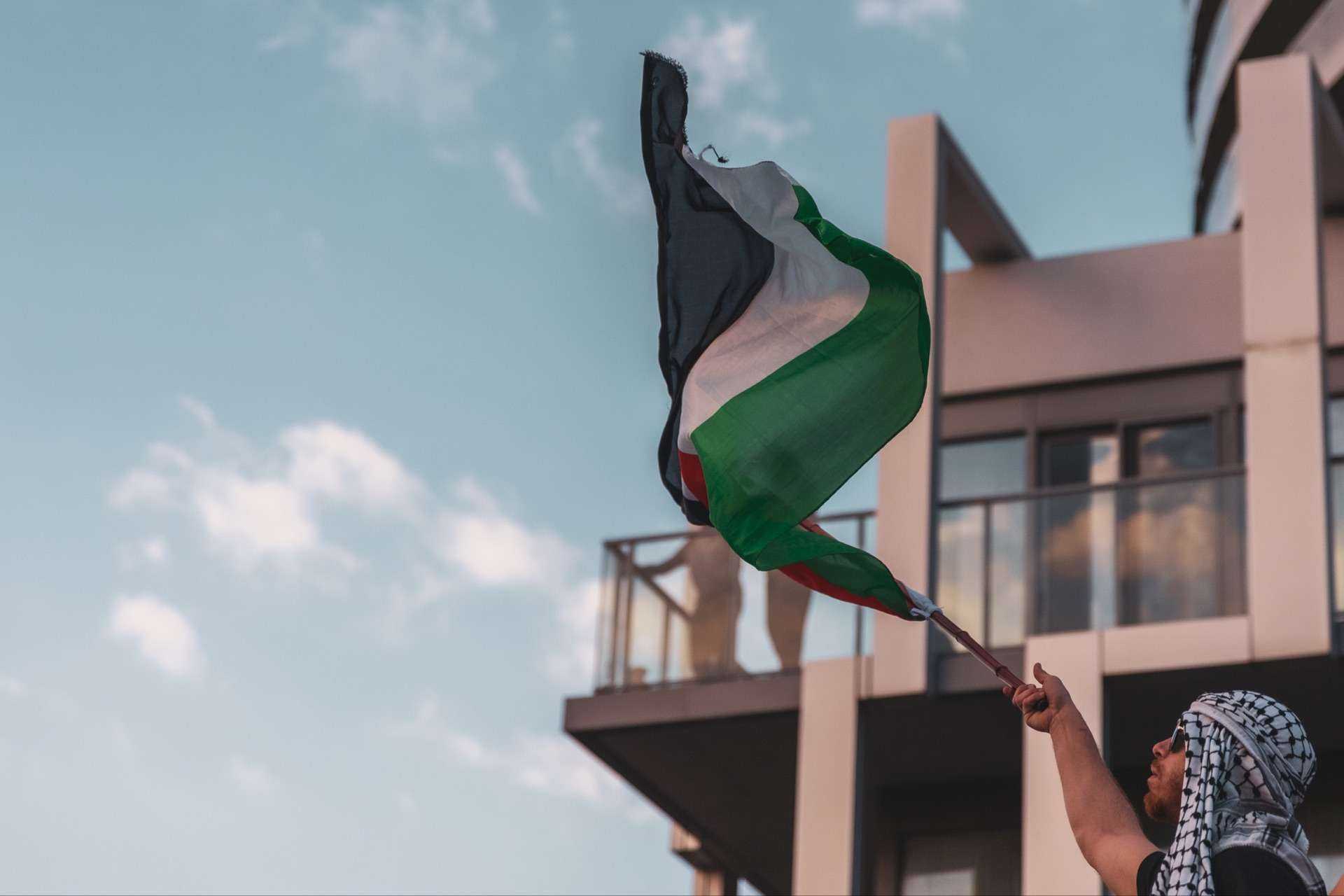
Every year during the month of May, the month of which the Palestinian Nakba or “catastrophe” took place seventy-three years ago, people remember what happened, and debates surrounding whether it truly is a Palestinian-Israeli “conflict” or if it is too unfair for it to be labeled as such, erupt. This year’s May, much like all the previous ones, marked yet another disaster for the Palestinian people. The East Jerusalem neighbourhood of Sheikh Jarrah faces forced displacement. During the final days of the holy month of Ramadan, a dispute of decades turned into eleven days of violence. Jerusalem was lit up, not by Eid celebrations, not by the laughter of children, but by Israeli explosions. “There is a concerted effort to displace the Palestinians who live there, and to replace them with biblically motivated settlers. That’s what’s happening,” stated Daniel Seidemann, an Israeli lawyer.
How did the Nakba come about? May 15th, 1948 is the day that the State of Israel came into being. In an effort to establish a Jewish-majority state, the Zionist movement implemented a process of violence and forced expulsion of hundreds of thousands of Palestinians from their homeland. By 1949, at least 750,000 Palestinians out of a population of 1.9 million were made refugees beyond the borders of the state. Zionist forces had taken more than 78% of historic Palestine, ethnically cleansed and destroyed about 530 villages and cities, and killed about 15,000 Palestinians in a series of mass atrocities, including more than 70 massacres.
That was just the start. Israel continues to oppress and dispossess Palestinians to this day.

Similar to the events of Sheikh Jarrah, the neighbourhood of Silwan in southern Jerusalem underwent violence as well. According to Seidemann, the targeting of Sheikh Jarrah and Silwan are a representation of Israel’s first effort at large-scale displacement of Palestinians in Jerusalem since the aftermath of the 1967 war.
The 1967 war, also known as the Six-Day War, came with heart wrenching losses, not only were over 20,000 troops killed by the IDF, but Israel was also able to seize the Gaza Strip and the Sinai Peninsula from Egypt, the West Bank, including East Jerusalem from Jordan, and the Golan Heights from Syria.
Condemned seventeen times by the United Nations General Assembly last year, the apartheid state continues to displace and occupy the land. In November of 2020 the UN’s Middle East envoy, Nickolay Mladenov, said he is “very concerned by Israel’s decision to advance construction in an illegal Jewish settlement in occupied East Jerusalem that would make establishing an adjacent Palestinian state even harder,” reiterating that “settlement construction is illegal under international law.”
Unsurprisingly enough, the US has played a significant role in empowering and funding Israel’s state and military over the past seven decades. Failing to explicitly condemn Israel’s acts of war and failing to label Hamas’ resistance as self-defence, the US has made it blatantly obvious which side of the “conflict” they support. Muhammad El-Kurd, a Palestinian poet and writer who is facing forced displacement in Sheikh Jarrah responds with: “The United States has waged more wars than there is Hamas members. I do not wait for the United States to tell me what constitutes as self-defence and what is not. That is not where my moral compass stems from. I don’t think the United States is in position, given all the genocides and wars it has partaken in, to tell me what is self-defence. What I know is that the military occupation that we are living in is excruciatingly violent, the siege that we’re living under is excruciatingly violent, and that’s the aggressor. That’s the occupier, that’s fundamentally what started the ‘so-called’ conflict.”
The most astonishing aspect of this issue is that people continue to debate whether the killing of civilians and children, the illegal occupation of land, and the forced displacement is justified. Human lives cannot be disposable, they are not just numbers on screens. They deserve to live.
According to Palestine’s head of mental health services doctor Samah Jabr, the standards of Post-Traumatic Stress Disorder (PTSD) do not fit Palestinians as “there is no ‘post’ because the trauma is repetitive and ongoing and continuous.”
“We’re not going anywhere,” – Alissar Abu Hasna
Stay in the loop with exclusive news, stories, and insights—delivered straight to your inbox. No fluff, just real content that matters. Sign up today!