



Artificial intelligence (AI) is often highlighted for its capabilities, such as generating information, automating tasks, and transforming services. However, less focus is placed on the infrastructure that makes these possible: land, servers, cooling, transmission, and electricity. As Caribbean governments consider data centres, an urgent question arises: what resources will power the AI economy, and what will Caribbean societies gain?
The scale of global demand makes that question consequential. The International Energy Agency estimates that data centres consumed about 415 terawatt-hours of electricity in 2024, 1.5% of global electricity consumption, and projects demand could reach approximately 945 terawatt-hours by 2030. For Caribbean states, the concern is how concentrated demand from individual facilities interacts with national electricity systems, water resources, climate vulnerability, and existing infrastructure needs.
Guyana entered this landscape in November 2025 through a memorandum of understanding with Cerebras Systems for an AI data centre of up to one hundred megawatts at Wales, near the Gas-to-Energy development. At full capacity, a facility of that size could draw electricity on the order of the continuous demand of 100,000 homes, depending on household consumption patterns. The proposed partnership also includes supercomputing capacity, research collaborations, training and internships.
Barbados has announced a data and green-power centre at Greenland, St Andrew, beginning with a 100-kilowatt installation and designed to expand to fifteen megawatts. At full build-out, that would be comparable to the continuous electricity demand of roughly 15,000 homes using the same illustrative benchmark. The government plans to own the first five megawatts of capacity, with private investment expected to support further expansion.
Trinidad and Tobago is considering larger developments, with agreements announced in July with Ernst & Young and Hummingbird AI Holdings for potential facilities of 300 MW and 150 MW, respectively. Due diligence will precede final decisions. A 300 MW facility at full capacity would power hundreds of thousands of homes, depending on usage. At this scale, digital development is intricately linked to energy policy, as each megawatt for computing must be generated, transmitted, and maintained within a physical system.

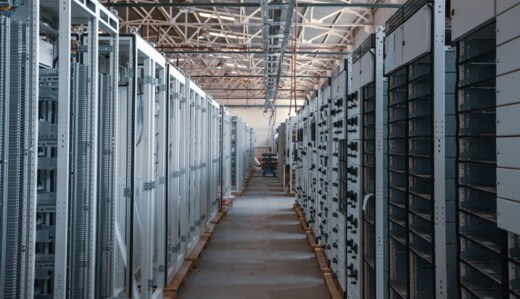
This matters in a region dealing with hurricanes, heat, flooding, energy costs, and uneven infrastructure. Data centres run nonstop, generating heat, requiring cooling and reliable power. They may also increase electricity and water demand, with backup generators driving emissions and air-quality issues. Announcements in Guyana, Barbados, and Trinidad and Tobago suggest data centres could become a regional development trend as Caribbean nations pursue the growing artificial intelligence economy. What starts as a few projects might expand into a broader infrastructure trend, raising questions about electricity, water, climate resilience, and public investment in national planning.
Large data centres require continuous power, cooling, and reliable telecommunications, which means future projects will have to be considered alongside the capacity of local grids and other essential systems. In Caribbean countries already contending with high energy costs, extreme heat, hurricanes, flooding and uneven infrastructure resilience, the location and scale of new facilities could shape how governments plan generation, transmission, backup power, and water use.
As more governments explore AI infrastructure, attention is also likely to turn to the terms attached to those investments. Projects will need to clarify expected electricity and water demand, the source of additional power, cooling systems, transmission requirements, and responsibility for financing upgrades. The same questions will apply to climate protection, particularly where facilities are expected to remain operational during storms, grid failures, or telecommunications disruptions.
The regional conversation will also extend beyond infrastructure capacity to who benefits from the investment. Governments have promoted data centres as potential sources of technical employment, training, research partnerships and new digital industries, while development frameworks place additional focus on local procurement, community impacts, energy affordability and the public costs that may accompany large-scale infrastructure expansion.
Data governance is likely to become another central issue as more computing capacity is built within the Caribbean. The Caribbean Telecommunications Union has already identified data governance and digital sovereignty as areas requiring greater regional attention. New facilities could give governments, universities and businesses more access to computing infrastructure within the region, while also raising questions about privacy law, cybersecurity, data storage, cross-border transfers and which legal jurisdictions govern Caribbean information.
If the current projects move forward and similar proposals emerge elsewhere, data centres could quickly become part of the Caribbean’s wider energy, climate, and development agenda. The region’s AI story is therefore beginning to move beyond software and digital services into the physical infrastructure needed to support them, with implications that could reach well beyond the countries now first in line.
Stay in the loop with exclusive news, stories, and insights—delivered straight to your inbox. No fluff, just real content that matters. Sign up today!