




Women’s mental health has been a topic of conversation for decades, yet coverage and research still lag behind the unique experiences women face, particularly around childbirth and its aftermath. Postpartum depression (PPD) and the more severe postpartum psychosis (PPP) affect women every year after they give birth.
Currently, a high-profile court case is putting PPD and PPP at the forefront of public conversation. As is often the case online, the internet is divided. A mother named Lindsay Clancy is charged with murdering her three children at the home she shared with her then-husband in January 2023.
While Clancy has not denied causing the children’s deaths, the central question at trial was whether she is criminally responsible for those actions or whether she was in the throes of a psychotic episode and therefore cannot be held legally accountable. In Massachusetts, that determination hinges on whether, due to a mental disease or defect, she either could not appreciate the wrongfulness of her conduct, or could not conform her behaviour to the requirements of the law.
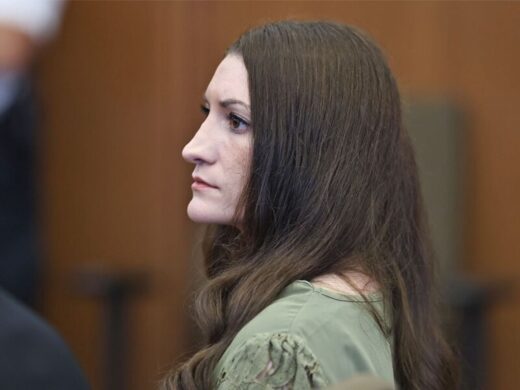
Photo Courtesy of courthousenews.com
Public reaction has splintered into several camps. Some believe Clancy is not guilty at all; others accept that she caused the deaths but argue she is not guilty by reason of lack of criminal responsibility due to PPP. A smaller, but vocal group has floated theories that her then-husband, Patrick Clancy, was the actual perpetrator and framed his wife, claims that have circulated widely online despite no charges against him. Another segment maintains that, regardless of her mental state, she is morally and legally culpable for the deaths of three children.
Those online theories have escalated far beyond legal arguments. Some commentators accuse Patrick Clancy of neglect, mistreatment, and even sexual assault against his own children, allegations that remain unproven in court and could carry serious reputational and legal consequences if repeated as fact. Ethically, these claims should be clearly labeled as speculation, not established evidence.

The case’s ripple effects are reaching into private lives. Some men report that if their partners express sympathy for Clancy, they question whether those partners could be trusted with future children; in a few instances, relationships have ended over these disagreements. Meanwhile, some mothers have taken to social media to express support for Clancy, posting videos with their children and dramatizing stressful moments with captions such as “Same, Lindsay,” content that many fathers find alarming and destabilizing.
Fathers, in particular, have voiced anger and fear, concerned that the volume of supportive content normalizes violence and makes them question whether new mothers can be safely left alone with infants. The case has drawn national attention across genders, and any outcome risks alienating one side or the other.

Photographer: Mehrpouya H
On September 5th, 2026, the trial ended in a mistrial after the jury deadlocked on whether Clancy was criminally responsible. She remains charged with murder and is being held in a psychiatric hospital pending further proceedings. Prosecutors must now decide whether to retry the case, pursue a plea, or drop charges; her defense has signaled it may seek dismissal.
The aftermath will inevitably spur more civil discourse, and more division online as people retreat further into their perspective schools of thought. How this case ultimately resolves will shape not only Clancy’s fate but also public understanding of postpartum psychosis, the limits of the insanity defense, and the responsibilities of media and platforms when theories outpace evidence.
Stay in the loop with exclusive news, stories, and insights—delivered straight to your inbox. No fluff, just real content that matters. Sign up today!