
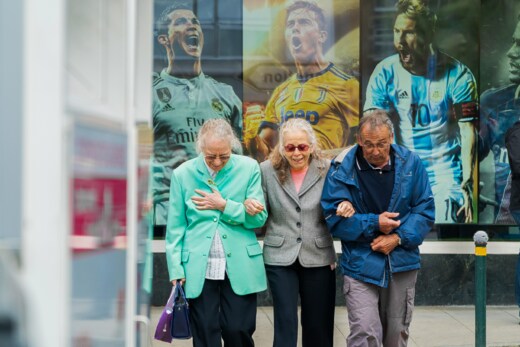

Are you hoping for a long life? Most people would answer yes, but if you live into old age, what kind of life do you hope to have? That is a question a lot of Baby Boomers are pondering right now. Their demographic wave transformed schools, workplaces, housing, politics, and now they are redefining old age, but not in the way one might hope.
Edwards Deming was a statistician who helped transform modern manufacturing by asking managers to stop guessing and start measuring. A mantra attributed to him reads, ‘In God we trust. All others must bring data.’
Today, we have boatloads of data, and looking at it should make us think.
A recent article in The Economist caught my attention. It included a Lexis diagram that shows how mortality changes by age, calendar year, and birth cohort. Demographers and epidemiologists will know this type of diagram well, but it is rare to see one in mainstream journalism.
A Lexis chart looks more like an amoeba in a petri dish than a bar graph. That is because colours are used to reveal patterns in mortality, showing how the risks of living and dying change with age, era, and generation. Once I understood what I was looking at, I saw the stark truth as only real numbers can tell it.
The data describing the mortality rates for boomers in America does not paint a pretty picture. While boomers have enjoyed economic and social advantages, they have not experienced predicted gains in longevity. Why? Improvements in their life expectancy slowed and even reversed over their lifetime.
To explain, The Economist article reads, “AIDS hit in their early adult years; the opioid crisis struck in middle age. On top of that, boomers are significantly less healthy than previous generations.”

An American child born in 1880 had a life expectancy at birth of 39 years and entered a world where infections could be deadly. A child born after the Second World War benefited from antibiotics, vaccines, improved nutrition, and remarkable advances in medicine. By 1980, a child enjoyed a life expectancy of about 74 years.
Boomers show how human beings can be both remarkable and foolish. It is true, we have conquered diseases that once cut lives short. We have developed medicines that would have seemed like science fiction to our grandparents. We can replace damaged joints; repair blocked arteries and detect disease earlier than ever before.
Yet at the same time, we have created a world that often works against our own health. We have not been particularly smart about the life choices we make every day. The boomers are now the first to learn the consequences of modern lifestyles in old age.
Yes, higher numbers of people are living longer than ever before. When researchers examine mortality by generation, the picture becomes more troubling.
When looking at younger American cohorts, the researchers summed their data up this way. “Alarmingly, cohorts born after 1970 exhibited deteriorating patterns in all major cause groups at young and middle-adult ages. Layered on these cohort dynamics was a broad mortality deterioration that began around 2010 and was experienced by all living adult cohorts at the time, driven primarily by cardiovascular disease mortality.”
We need to take a lesson from Deming’s manufacturing savvy. It is not good enough to collect the data and gaze at it. We must make changes.
The gains we have made to extend our chances for a long and healthy life are being eroded. We had better start acting on the data. That, or pray to God a lot harder.
This column offers opinions on health and wellness, not personal medical advice.
Stay in the loop with exclusive news, stories, and insights—delivered straight to your inbox. No fluff, just real content that matters. Sign up today!