Featured Cover Story
Trust on Trial
“A conditional discharge is not an acquittal. It is a finding of guilt with the public record later erased, an outcome few civilians accused of abusing confidential systems could expect.”

On January 19th, 2026, Toronto Police Const. Elias Mouawad ran a licence-plate query through a confidential police database, but he did not do it for a lawful investigation. Months later, he stood in a Toronto courtroom and pleaded guilty to unauthorized use of a computer. On Monday, he received a conditional discharge, one year of probation and 100 hours of community service. If he completes the conditions, he will have no criminal conviction registered against him.
That outcome should provoke a difficult public question: when a police officer misuses the state’s most sensitive investigative tools, why can the consequences be so uncertain, so delayed, and sometimes so light?
Elias Mouawad’s case is not proof that every officer is corrupt, nor should it be treated as a verdict on colleagues who have not been tried. It lands within a long and documented pattern: officers in Toronto and across the Greater Toronto and Hamilton Area have repeatedly been convicted of serious crimes, then kept their jobs after internal discipline. This article will examine whether the institutions that employ, investigate, discipline and oversee police can be trusted to impose consequences equal to the power police hold.

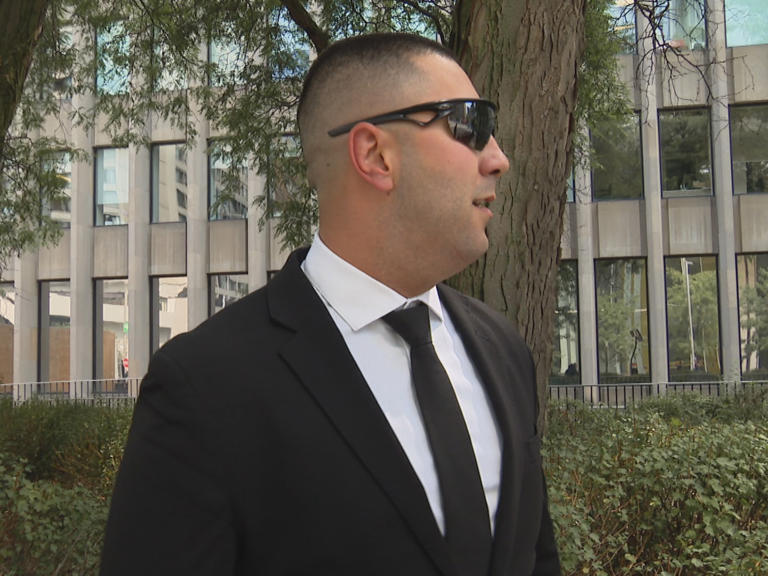
Photo Courtesy of msn.com
https://toronto.citynews.ca/2026/02/27/leca-ontario-police-misconduct-case-officers-charged-peel-york-toronto/Project South began in June 2025 after York Regional Police said it disrupted an alleged conspiracy to murder an Ontario corrections manager. In February 2026, investigators announced charges against seven active Toronto officers and one recently retired officer, alongside 19 civilians, 27 accused in total.
The allegations are grave: illegal access to confidential police information, alleged leaks to people connected to organized crime, bribery, obstruction of justice, drug trafficking and theft. York police have alleged that leaked information was connected to shootings, extortion and robberies. These remain allegations; most accused officers have not been tried, and the presumption of innocence applies fully.
What is already established is narrower but consequential. Former Const. Derek McCormick pleaded guilty to breach of trust and theft under $5,000 and received a 10-month conditional sentence, including five months of house arrest; unlike a discharge, that resulted in a conviction. Elias Mouawad then pleaded guilty to unauthorized use of a computer after the Crown withdrew a breach-of-trust charge. Superior Court Justice Catherine Rhinelander found that his database search represented a breach of the trust placed in police but imposed a conditional discharge after citing his early guilty plea and remorse.
A conditional discharge is not an acquittal. It is a judicial finding of guilt; if probation is completed, no conviction is registered. That means no criminal record, even though the misconduct involved access to a police database, a system ordinary residents cannot legally use for private purposes.
Elias remains suspended without pay and still faces a Toronto Police professional-standards tribunal, which will decide whether he remains fit to police. That hearing has not yet been scheduled.
The deeper concern is historical repetition. In 2020, CBC examined Toronto Police disciplinary outcomes over roughly a decade and found 63 officers who had been convicted of crimes, but not fired after tribunal hearings. The offences included impaired driving and assaults involving handcuffed suspects or spouses. Most kept their jobs; penalties included forfeited days off, temporary demotions or other non-dismissal discipline. Only three officers were fired through the tribunal.
Three years earlier, CityNews identified 59 officers across the GTHA convicted of serious crimes between 2013 and 2017, including fraud, domestic violence, assault and impaired driving. Almost all were deemed fit to remain in policing; only five were dismissed.
Those findings do not establish that every disciplinary decision was wrong. Tribunals must weigh individual circumstances, rehabilitation, employment law and proportionality. When the same broad result recurs across services, years and offence types: conviction, internal hearing, continued employment, the public is entitled to ask whether “fit to police” has become a default answer rather than a rigorous test.


The stakes are heightened because police misconduct is not an ordinary workplace offence. A database search can expose a person’s address, movements, associations or vulnerabilities. When such information allegedly reaches criminal networks, the harm can extend far beyond privacy: it can enable intimidation, violence and organized crime.
Toronto’s present crisis of confidence did not emerge from nowhere. In 1989, Ontario’s Task Force on Race Relations and Policing (created after the deaths of Lester Donaldson and Michael Wade Lawson) found that relations between police and visible-minority communities remained a critical and pervasive issue. It recommended training, monitoring and stronger attention to officers whose conduct raised concerns.
In 1995, the Commission on Systemic Racism in the Ontario Criminal Justice System released a 450-page report documenting racial discrimination in policing and sentencing, including the overrepresentation of Black people in prison and concerns about differential police treatment. It recommended enforceable guidelines for police stops and questioning, monitored through community feedback.
Those reports helped drive reforms, including stronger civilian oversight. Yet decades later, African Caribbean, Indigenous and racialized residents continue to report disproportionate police attention, while accountability for officers can move slowly through criminal proceedings, internal investigations and tribunal hearings. The disparity is corrosive: communities asked to accept intensive policing are also asked to wait patiently while those with state power face a process that can preserve employment, income and reputation long after allegations become public.
Consider the inequality of consequences. A civilian convicted of fraud, unauthorized computer use, or breach of trust may face a criminal record that affects employment, housing, travel, immigration status and family proceedings. An officer who misuses a police database may, in appropriate circumstances, receive a discharge and later argue before a police tribunal that a conviction would unfairly end a policing career.
That is not to say Elias’s sentence was unlawful or that judges must ignore rehabilitation. Courts recognize that only exceptional circumstances should justify a discharge for an officer’s breach of trust. The public is entitled to ask whether “exceptional’ is being applied consistently, and whether the badge itself becomes a mitigating factor rather than an aggravating one.
The accountability system also risks delay. Criminal cases can take years. Ontario’s Law Enforcement Complaints Agency has taken over conduct investigations involving the charged Toronto officers and three suspended Peel Regional Police officers linked to Project South; no Peel officer has been charged. LECA has said related misconduct investigations were postponed under the Community Safety and Policing Act because of parallel criminal proceedings.
That sequencing may be legally necessary, but it leaves the public in a prolonged limbo: allegations circulate, trust erodes, and disciplinary answers wait.

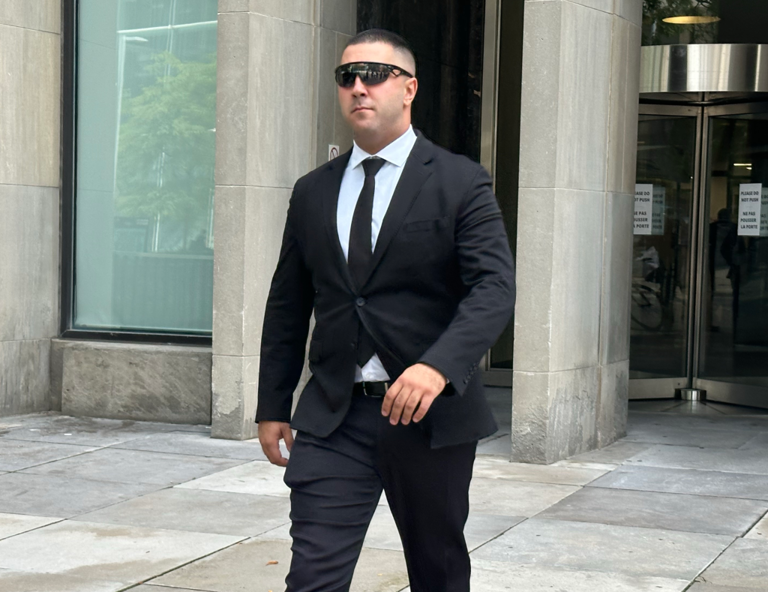
Photo Courtesy of MSN
Toronto’s police leadership, the Toronto Police Services Board, LECA and elected officials should answer specific, measurable questions:
- How many Project South officers will remain employed if criminal proceedings end without dismissal?
- What criteria will the professional-standards tribunal use to decide whether a conviction, guilty plea or admitted database misuse is incompatible with policing?
- Will the service publish timely, anonymized data on misconduct investigations, tribunal outcomes, delays and penalties?
- How will LECA protect investigations from becoming indefinitely stalled by parallel criminal cases?
- What independent auditing will detect improper database queries before information reaches criminal networks?
- How will the service address racialized communities’ longstanding evidence of disproportionate policing while also enforcing discipline internally?
Meaningful reform requires more than statements condemning corruption. It requires public reporting, independent investigations with enforceable timelines, transparent disciplinary outcomes, mandatory dismissal reviews for convictions involving dishonesty or violence, and routine audits of database access with consequences for unauthorized searches.
Toronto does not need a headline that condemns before evidence is tested. It needs something harder: a system that treats a police officer’s misuse of public power as a profound betrayal, not a private employment problem to be managed quietly.
Project South has already produced two guilty pleas. The first serving Toronto officer sentenced in the probe received no criminal record, despite a judge’s finding that his conduct breached public trust. The public should watch the next stage closely: who is fired, who is reinstated, and whether accountability arrives at the same speed and severity for those who wear the badge as it does for everyone else.