


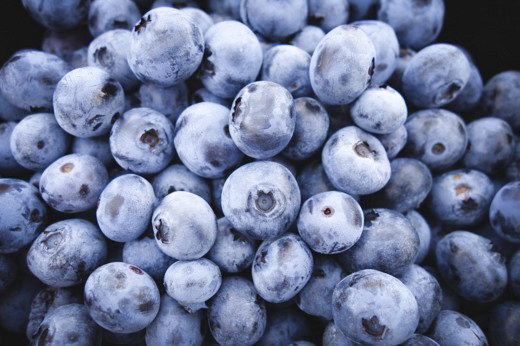

When the weight of the world feels too heavy, I find solace in going back to the basics. I look for something wholesome and dwell on it, or better, nurture it. In this instance, it was a roadside stand and a basket of blueberries that caught my attention. How wonderful to uncover the stories and possibilities of this little fruit, each one borne of an ovary of a single flower. Wholesome indeed.
Most people still know, one hopes, that blueberries were only wild food not so long ago. Indigenous peoples across North America gathered and preserved them. One traditional name, star berry refers to the tiny five-pointed star at the blossom end of the fruit.
Just over a century ago, a New Jersey woman set blueberries on the course of a commodity food. Elizabeth Coleman White was the daughter of a cranberry farmer at Whitesbog in New Jersey’s Pine Barrens. In 1910, she read a paper by Frederick Coville, a botanist investigating blueberry cultivation. Coville had discovered that blueberries required acidic soil, explaining why they flourished naturally in the Pine Barrens.
White hired local woodsmen to search the surrounding countryside for bushes producing high volumes of large and sweet berries. The finders were paid for promising plants, and some varieties eventually carried the names of the people who discovered them. The Rubel variety was named for Rube Leek, who found the original wild bush.
By 1916, a collaboration between White and Coville resulted in the first commercial crop of cultivated highbush blueberries.
Today, there are sophisticated blueberry-breeding programs around the world. Researchers are developing varieties that can tolerate heat, resist disease, survive shipping and, most importantly, withstand mechanical harvesting. Blueberries have traditionally required hand-picking because ripe fruit is easily damaged. Now breeders are trying to produce berries firm enough to be harvested by machines, while remaining attractive and delicious to the consumer.

Scientists are now using DNA markers to identify desirable traits. The best blueberries that Elizabeth White’s workers selected by walking through the woods are now being selected with genetic information.
Blueberries provide fibre, vitamin C, vitamin K and manganese, along with anthocyanins, the plant compounds responsible for their deep blue-purple colour. These nutrients are what make the blueberry stand out as an excellent choice to support cardiovascular and metabolic health.
If you have a sunny patch of garden, it is possible to grow your own bush, and breeders are making it easier to select the variety that suits your local conditions. Blueberries need acidic soil, along with good drainage and plenty of sunlight. An inexpensive soil-pH test from a garden centre can tell you whether your soil is suitable. If it is not, a raised bed with properly prepared soil may be the easier route. With the right conditions, a blueberry bush can produce for decades.
Not everyone has a garden, of course. Frozen blueberries are an excellent alternative, with most of the nutritional value staying intact.
There is an additional benefit of having blueberries at hand. It is a simple test for how well you are looking after your teeth. Eat some blueberries, then brush and floss your teeth. After swishing water in your mouth, if you spit out little bits of blueberry, it means there is more work needed to clean between your teeth and around gums after meals. If you take the blueberry test regularly, you will keep your own teeth for a lifetime. Plus, you will get the benefit of general good health that comes when oral health is maintained.
This is the time of year for pre-ordering plants from nurseries for pick-up or shipping next Spring. I have put in my order.
This column offers opinions on health and wellness, not personal medical advice.
Stay in the loop with exclusive news, stories, and insights—delivered straight to your inbox. No fluff, just real content that matters. Sign up today!