

Editor’s Note: We are revisiting some of our most intriguing articles. Thanks to Paul Junor for opening our minds to alternative perspectives.
The opening of Colourful Parachutes: Imagining Alternative Futures Through the Power of Play on April 25th, 2026, at The Power Plant Contemporary Art Gallery invites a rethinking of how young people imagine the future. Located at 231 Queens Quay West at Harbourfront Centre, the exhibition positions play as practice: a method for inquiry, expression, and agency.
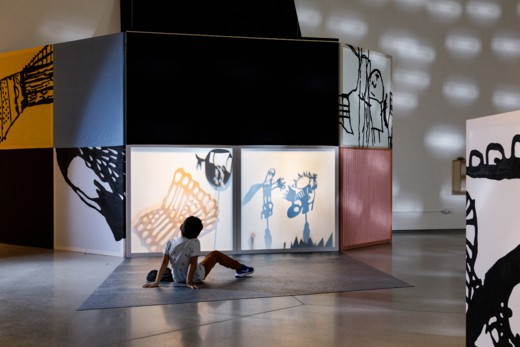
Described in a March 25th, 2026, press release as a fun, interactive exhibition for all ages, the show transforms the gallery into a hands-on environment. Visitors are encouraged to engage directly with the work, collapsing the distance between observer and participant. At its core are two guiding questions: “What do we want the future to look like,” and “What if we ask the children what they want?”
Artistic Director Adelina Vlas underscores this premise, framing play as a serious creative force. She notes that “Colourful Parachutes is for audiences of all ages, while foregrounding children’s potential as creative agents and future-makers.” The exhibition, she adds, reconsiders how imagination (and responsibility for the future) can be shaped both inside and beyond gallery walls.
The show’s curatorial strength lies in its cohesion. Rather than presenting isolated works, it constructs an ecosystem of participation. Through tactile installations, film, and collaborative environments, the exhibition explores climate anxiety, environmental awareness, and the need to center youth voices. It also emphasizes early connections to nature and the collective power of imagination.
Ten artists from Canada and abroad contribute to this vision. Toronto-based Claire Greenshaw presents a large-scale graphite mural of the Athabasca Glacier, gradually erased and reshaped over time, a quiet meditation on environmental change. Montreal duo Meredith Carruthers and Susannah Wesley invite audiences into a tactile space using natural materials, emphasizing process over product.

Sassa and Tobias Linklater offer stop-motion films created in childhood, reflecting on treaty relationships and movement across land and water. Their work adds emotional depth, grounding the exhibition’s future-facing lens in memory and history. Ana Mendieta’s Parachute (1973) captures children at play, echoing the exhibition’s central motif while situating it within a broader artistic lineage.
Brazilian artist Rivane Neuenschwander’s interactive shadow booth (developed with children) encourages visitors to confront their inner worlds, blending play with introspection. Harold Offeh’s The Mothership Collective 2.0 (2025) creates a vibrant, communal space for sound, text, and speculative thinking. Temitayo Ogunbiyi’s sculptural installation invites physical movement: climbing, swinging, exploring, while Robin Rhode contributes a large-scale, site-specific work that anchors the exhibition visually.
The exhibition runs from April 25yj to September 7th, 2026, with a public opening party on April 24th. Admission is free, reinforcing its accessibility and community focus.
Stay in the loop with exclusive news, stories, and insights—delivered straight to your inbox. No fluff, just real content that matters. Sign up today!