
Connect with us

Subscribe

Subscribe

Health & Wellness

Leave your earwax alone

“Never put anything smaller than your elbow in your ear.”

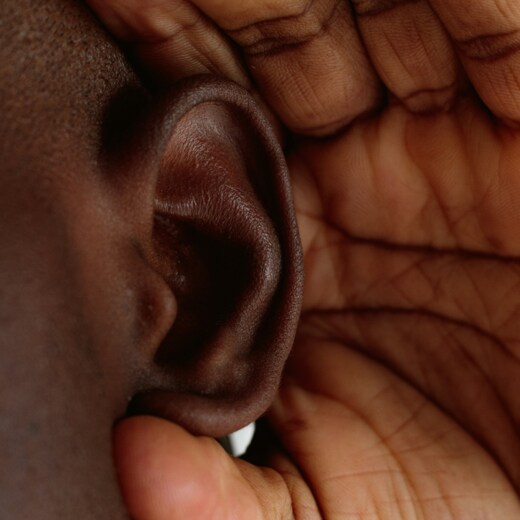
Photographer: Dylann Hendricks | 딜란

It is gross. That sticky yellow goo you can see in someone’s ear! You want it to not be there, but before you reach for a cotton swab or one of those little scoops sold online, consider this: earwax is best just left alone, even if people have long struggled to do that.

Some extraordinary uses for earwax are best stored in the history books. Pliny the Elder, a Roman naturalist who lived in the first century AD, listed earwax among the many ingredients in his encyclopedia of folk remedies, recommending it for everything from insect stings to skin sores.

Other traditions are hard to appreciate. In Japan, mimikaki is the practice of cleaning another person’s ears with a tiny bamboo pick. It is considered relaxing, and an act of affection. In India, itinerant ear cleaners offered ear-cleaning services in markets and on streets using metal instruments. Concerns about infection and injury have brought this to an end.

There remains, however, an urge among people for earwax to be removed at the first opportunity but resist the temptation. The truth is that your ears are self-cleaning and do not need scheduled care, your partner’s attention, or commercial remedies.

Earwax has an important function. It traps dust, pollen, bacteria, fungi, and even tiny insects before they can reach the delicate eardrum. The skin inside the ear canal then slowly migrates outward, carrying old earwax with it. Every time you chew, yawn, or talk, your jaw helps move the wax toward the opening of the ear where it dries and flakes away. Most healthy ears never need cleaning at all.

Yet, many people interfere. The worst offenders are cotton swabs. Manufacturers often print “Do not insert into the ear canal” right on the package, yet millions of us do exactly that. Instead of removing wax, swabs can push it deeper, packing it against the eardrum where it can cause hearing loss, ringing, dizziness, or pain. Ear, nose, and throat specialists have a saying: “Never put anything smaller than your elbow in your ear.”

Earwax is a blended mixture of secretions from specialized glands, dead skin cells, and a little oil. The combination keeps the ear canal slightly acidic, making it a difficult place for harmful bacteria and fungi to grow.

A surprising fact is that earwax is genetic. People of European and African ancestry usually have wet, honey-coloured earwax. Many East Asians and Indigenous peoples have a dry, gray, flaky variety. The difference comes from a single gene. The same gene is also associated with underarm body odour. People with dry earwax are less likely to need deodorant, a wonderful “I bet you didn’t know that” fact. Here is another: scientists use earwax genetics to study ancient human migrations.

As we age, earwax changes too. It often becomes drier and harder, making blockages more common in older adults. Hearing aids and earbuds can make matters worse by preventing wax from naturally working its way out. If your hearing suddenly seems muffled, do not assume it is old age. A plug of earwax may be the culprit and removing it safely can restore hearing instantly.

So, when should earwax be removed? Only when it is causing trouble: hearing loss, pain, fullness, ringing or when it prevents a healthcare professional from seeing the eardrum. Softening drops or gentle irrigation may help, but some people should avoid flushing the ear, particularly if they have a perforated eardrum, chronic ear disease, or previous ear surgery. In those cases, removal by a healthcare professional is the safest approach.

This column offers opinions on health and wellness, not personal medical advice.

Newsletter Signup

Stay in the loop with exclusive news, stories, and insights—delivered straight to your inbox. No fluff, just real content that matters. Sign up today!


Dr. W. Gifford-Jones, MD is a graduate of the University of Toronto and the Harvard Medical School. He trained in general surgery at Strong Memorial Hospital, University of Rochester, Montreal General Hospital, McGill University and in Gynecology at Harvard. His storied medical career began as a general practitioner, ship’s surgeon, and hotel doctor. For more than 40 years, he specialized in gynecology, devoting his practice to the formative issues of women’s health. In 1975, he launched his weekly medical column that has been published by national and local Canadian and U.S. newspapers. Today, the readership remains over seven million. His advice contains a solid dose of common sense and he never sits on the fence with controversial issues. He is the author of nine books including, “The Healthy Barmaid”, his autobiography “You’re Going To Do What?”, “What I Learned as a Medical Journalist”, and “90+ How I Got There!” Many years ago, he was successful in a fight to legalize heroin to help ease the pain of terminal cancer patients. His foundation at that time donated $500,000 to establish the Gifford-Jones Professorship in Pain Control and Palliative Care at the University of Toronto Medical School. At 93 years of age he rappelled from the top of Toronto’s City Hall (30 stories) to raise funds for children with a life-threatening disease through the Make-a-Wish Foundation.  Diana Gifford-Jones, the daughter of W. Gifford-Jones, MD, Diana has extensive global experience in health and healthcare policy.  Diana is Special Advisor with The Aga Khan University, which operates 2 quaternary care hospitals and numerous secondary hospitals, medical centres, pharmacies, and laboratories in South Asia and Africa.  She worked for ten years in the Human Development sectors at the World Bank, including health policy and economics, nutrition, and population health. For over a decade at The Conference Board of Canada, she managed four health-related executive networks, including the Roundtable on Socio-Economic Determinants of Health, the Centre for Chronic Disease Prevention and Management, the Canadian Centre for Environmental Health, and the Centre for Health System Design and Management. Her master’s degree in public policy at Harvard University’s Kennedy School of Government included coursework at Harvard Medical School.  She is also a graduate of Wellesley College.  She has extensive experience with Canadian universities, including at Carleton University, where she was the Executive Director of the Global Academy. She lived and worked in Japan for four years and speaks Japanese fluently. Diana has the designation as a certified Chartered Director from The Directors College, a joint venture of The Conference Board of Canada and McMaster University.  She has recently published a book on the natural health philosophy of W. Gifford-Jones, called No Nonsense Health – Naturally!

Click to comment

Leave a Reply

Your email address will not be published. Required fields are marked *

Trending

Classic Man – Eric “Cinnamon” Brown

Feature Spotlight

Boa Vista Children Gain Lifesaving Care

Likes & Shares

Antigua’s Young Chef Inspires Caribbean Excellence

Featured

Canada Confirms Quality with 1-0 win over South Africa

Sports

Advertisement
Newsletter Signup

Stay in the loop with exclusive news, stories, and insights—delivered straight to your inbox. No fluff, just real content that matters. Sign up today!

Legal and Advertising Disclaimer: Advertisements, sponsored content, business listings and other promotional materials are supplied by third parties. Their publication does not constitute an endorsement, recommendation, representation, warranty or guarantee by TCN Now Inc. Advertisers and content providers are responsible for the accuracy, legality and substantiation of their claims and for obtaining all necessary copyright, trademark, privacy and other permissions. To the fullest extent permitted by law, TCN Now Inc., its directors, officers, employees, contractors and affiliates shall not be liable for any loss, damage, cost, expense or claim arising from third-party advertisements, products, services or promotional content. TCN Now Inc. reserves the right to refuse, edit, suspend or remove advertising or promotional content at its discretion. Editorial and Content Disclaimer: The opinions, commentary and viewpoints expressed in signed articles, columns, letters, guest submissions and other contributor content belong to the respective authors and do not necessarily reflect the opinions or views of TCN Now Inc., its directors, officers, employees, editors or affiliates. Content published by TCN Now Inc. is provided for general informational purposes only and is not intended as legal, financial, medical or other professional advice. While reasonable efforts are made to ensure accuracy, TCN Now Inc. does not guarantee that all information will be complete, current or free from error. To the fullest extent permitted by law, TCN Now Inc. disclaims liability for losses or claims arising from reliance upon contributor opinions, third-party submissions or general informational content. Copyright © 2026 TCN Now Inc. All rights reserved. Unless otherwise stated, the text, photographs, graphics, logos, designs and other original content appearing on this website are owned by or licensed to TCN Now Inc. and may not be copied, reproduced, republished, distributed, modified or commercially used without prior written permission, except as otherwise permitted by law. Third-party names, logos, trademarks and content remain the property of their respective owners.

Connect
Newsletter Signup

Stay in the loop with exclusive news, stories, and insights—delivered straight to your inbox. No fluff, just real content that matters. Sign up today!