


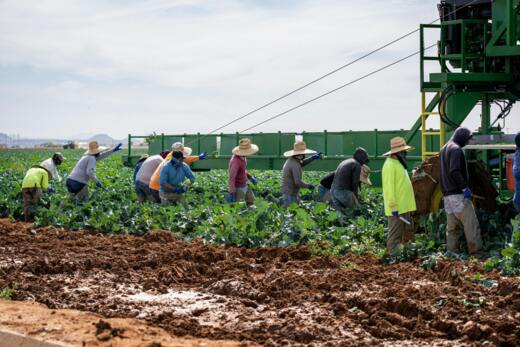

Consumers care more than ever about how food gets to their tables, yet Canada routinely ignores the hands that harvest it. In fields across the country, Caribbean migrant workers face a quiet, ongoing battle with poor health and unsafe working conditions. This year marks the 60th anniversary of the Seasonal Agricultural Worker Program (SAWP), a system that continues to funnel thousands of international labourers into Ontario to sustain our agricultural sector. Yet, six decades later, the economic survival of this industry still depends on keeping these essential workers in a state of constant vulnerability, trapped by limited healthcare, substandard housing, and severe occupational risks. To attribute these health disparities simply to the dangers of farming ignores the real culprit, a web of unfair laws and systemic barriers that actively prevent these workers from getting help.
This systemic failure is highlighted by a 2023 report on Jamaican farmworkers in Southern Ontario, which connected the industry’s harsh realities directly to severe mental and physical health declines. The report identified that extended family separation, abusive work settings, severe isolation in cramped housing, racism and social exclusion, and chronic illnesses significantly contributed to their psychological distress.
Workers described their distress as “stress” and explicitly compared their living conditions in bunkhouses to historic plantation slavery, exposing the extreme power imbalance built into the current program. Beyond the psychological toll, these packed living quarters leave workers highly vulnerable to infectious disease outbreaks, while their daily labour leaves them entirely unprotected from escalating environmental threats such as extreme heat.
These severe health outcomes are directly tied to the complex interplay of structural vulnerabilities embedded within the SAWP. Under the program, workers are issued closed work permits, meaning their legal status in Canada and their health insurance are tied to a single employer. This setup creates a culture of fear, forcing workers to delay or avoid medical treatment out of terror that they will be fired or deported.

Healthcare providers routinely witness these barriers, noting that bosses frequently breach worker confidentiality and that the constant threat of deportation stops sick or injured labourers from seeking help. The ongoing practice of medical repatriation has contributed to a cruel system where migrant workers who become ill or injured are stripped of their work status and sent back to their home countries, terminating access to care mid-treatment and making follow-up care impossible. This deliberate feature of the SAWP shifts the responsibility of long-term care onto Caribbean nations, which often lack the specialized healthcare systems needed to sustain treatments initiated in Canada.
The root causes of these health crises are becoming harder to ignore as local advocates push for legal reform. A breakthrough came when four injured Jamaican migrant workers won a landmark 2023 legal victory against Ontario’s Workplace Safety and Insurance Board (WSIB). The board had a long-standing practice of deeming, terminating compensation after 12 weeks based on the fictional assumption that repatriated workers could earn an income in Ontario.
In a historic ruling, the Workplace Safety and Insurance Appeals Tribunal ordered the board to calculate benefits based on the realities of workers’ lives post-repatriation and significantly held that the panel may consider anti-Black racism and discrimination when weighing evidence. Yet even with this major courtroom victory, systemic roadblocks remain tightly in place. The federal government further choked off workers’ options by quietly ending the Agri-Food Pilot program early in 2025, shutting down a critical pathway to permanent residency. Although the 2026 Seasonal Agricultural Worker Program contracts added new rules for worker privacy and housing security, critics argue these minor changes fail to address systemic exploitation.
As the Seasonal Agricultural Worker Program reaches its 60th anniversary, Canada should consider this a moment for meaningful reflection. A more human-rights-based and compassionate approach means looking beyond the fields to ensure these essential individuals are not seen as temporary labour. Policy changes should focus on offering open work permits, expanding access to healthcare, and creating genuine opportunities for permanent residency. At the community level, we can support by connecting with regional advocacy groups such as Justicia for Migrant Workers or by volunteering with local initiatives such as Polycultural Immigrant & Community Services or The Neighbourhood Organization (TNO) Worker Support Services. A full list of organizations supporting migrant agricultural workers across Canada is available through the Migrant Worker Health Project.
As Caribbean wisdom reminds us, health is wealth and protecting the well-being of the people whose hands grow our food is a natural step toward building a healthier, more inclusive community.
Stay in the loop with exclusive news, stories, and insights—delivered straight to your inbox. No fluff, just real content that matters. Sign up today!