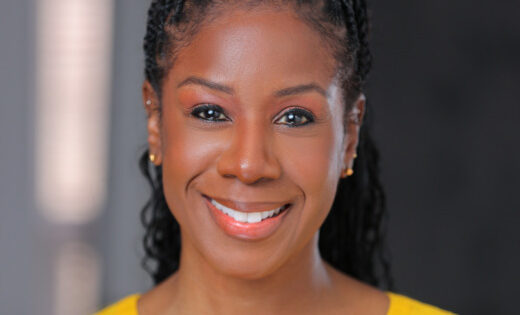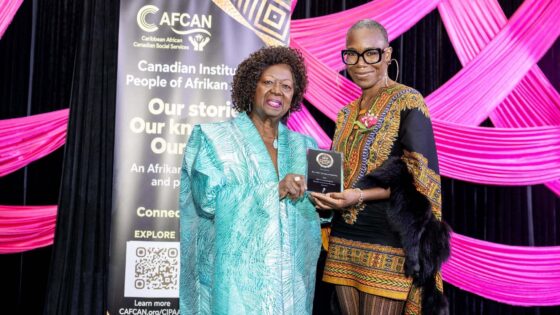

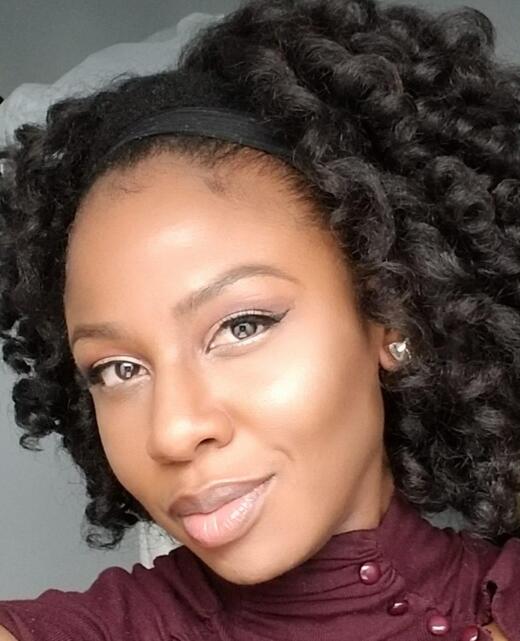

To enter an institution as a client is to be evaluated; to re-enter it as a scholar is to dismantle its scales. As a seventeen-year-old, Camisha Sibblis encountered the quiet, bureaucratic machinery of judgment. It was a world divided into rigid categories of the deserving and non-deserving, where vulnerable young Black women were forced to perform worthiness while navigating condescension.
She felt the friction between colorblind rhetoric and human reality. “The way that I was treated as a young Black woman made me aware of the duality,” Camisha reflects. “You have to perform what deserving is… there is so much judgment involved and so much condescendence involved that I definitely considered at that point how I can enter into these systems and humanize them for people who were like me who ended up in my position, who were real human beings deserving of care and compassion that the system wasn’t giving,”
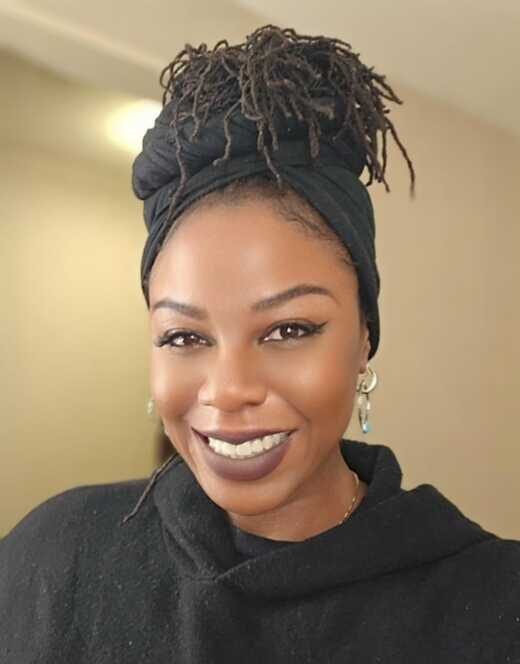
Long before she was Dr. Camisha Sibblis: sociologist, criminologist, registered social worker, and founder of transformative academic institutes, she was a parentified child navigating personal upheaval. Growing up in Toronto as the daughter of reggae icon Leroy Sibbles, her early life was a surreal contrast. Her father was the “Coolest dad ever,” who drove a talking car, collected gadgets, and taught her how to dismantle firearms during target practice.
In Jamaican cultural circles, admirers would literally bow when he walked by, an attention that deeply embarrassed his young daughter. She sang backup on his records and recorded a duet with him, yet she deliberately turned away from the stage. Seeing the grueling gamble of the music industry firsthand, she sought stability over the spotlight.
When her parents separated and subsequently divorced, the family fractured dynamically. At twelve, she moved to Maple, Ontario, transitioning from a multicultural neighbourhood into an environment where she was one of only three African Caribbean students in her entire school. In Maple, she experienced the unsettling duality of being simultaneously invisible and hyper visible. Classmates caricatured her, singing her name to the melody of “Aisha,” while teachers operated under low expectations.

Yet amidst institutional dismissal, one moment ignited her trajectory. A teacher named Mr. Wearett sat down with her father during a parent-teacher interview and offered a simple, radical assertion: Camisha could do anything. “He was the only teacher that spoke about me in that way,” she recalls. “I carried those words with me and it really bolstered how I thought about my possibilities.”
When teen motherhood arrived at seventeen, it pressed her into immediate adulthood, stripping away whatever remained of her youth. Yet her son also provided an anchor. Fast-tracking her high school completion, she entered university by 1997, moving into family residence at nineteen with OSAP funding and a toddler in tow. While her contemporaries went out to campus pubs and clubs, Camisha stayed home in her apartment, learning to budget for furniture and textbooks while managing isolation. She married at twenty-two and had two more children, balancing mothering three kids with rigorous academic study.
Her professional vocation evolved through a process of elimination. Initially, she dreamed of becoming an obstetrician-gynecologist, inspired by Dr. Cliff Huxtable on The Cosby Show, who slipped away to deliver babies and make families happy, until she realized she had zero tolerance for blood. She pivoted to psychology, then philosophy, where she fell in love with analytical reasoning and psychoanalysis. Preparing to study law, she wrote her LSAT and requested reference letters. A professor stopped her with a crucial question, “Have you ever hung out with lawyers?”
Reflecting on her interactions with the legal process, she recognized that legal advocacy often required defending oppressive systems rather than pursuing pure truth. “I realized that I wasn’t going to be able to only advocate for the truth. I had to advocate for the law, which often is an extremely oppressive process,” she explains. “He suggested social work to me because you actually are a social justice advocate.”

As a frontline practitioner, Camisha brought deep empathy to child welfare investigations, school social work, and clinical assessments for the Office of the Children’s Lawyer. Her ability to perceive unspoken emotional cues made her an effective clinician, leading her to earn a PhD from York University to bolster her private psychotherapy practice. When she began teaching university courses, a new calling emerged. African/Caribbean female students approached her after class, expressing relief at finally seeing an African/Caribbean instructor who spoke candidly about systemic race dynamics. “I realized that that is where my activism had to pivot,” she says. “So, I decided to be a professor.”
That pivot eventually altered Ontario legal history. In 2017, while serving on the faculty at the University of Windsor, Camisha authored an Impact of Race and Culture Assessment (IRCA) (an Enhanced Pre-Sentence Report) in R. v. Morris, a case involving a young Black man named Kevin Morris. Her comprehensive report detailed how systemic anti-Black racism, neighbourhood trauma, and institutional bias shaped Morris’s life. Justice Shaun Nakatsuru utilized her assessment to mitigate Morris’s sentence, establishing a legal precedent in Ontario that required courts to take judicial notice of systemic anti-Black racism during sentencing.
Yet true to her critical lens, Camisha refuses to celebrate reform uncritically. She questioned whether race-informed reports can genuinely protect Black youth when criminal courts continue to view them through a lens of inherent risk and carceral logic.
For Camisha, true justice requires transforming the institutions themselves.
Today, as Director of the Black Scholars Institute at the University of Windsor, Camisha leads what she describes as a movement rather than a standard academic department. Having co-founded RAACES and chaired the President’s Anti-Black Racism Task Force, she helped spearhead a cluster hire that expanded the university’s African/Caribbean faculty from four to twenty-four scholars. The institute serves as an intellectual sanctuary and pipeline, connecting community activism with rigorous scholarship to mentor the next generation of African/Caribbean academics.
From a teenage mother to an acclaimed scholar reshaping legal and academic landscapes, Dr. Camisha Sibblis’s life demonstrates that lived adversity can become an instrument for structural liberation. When asked what message she would offer a seventeen-year-old young woman finding herself pregnant and uncertain about her future, she reaches back to the teacher who first saw her potential. Her answer is crisp, unyielding, and rooted in earned dignity, “You can do anything you want. Don’t let teen motherhood define you. You can do and be anything that you want”
Stay in the loop with exclusive news, stories, and insights—delivered straight to your inbox. No fluff, just real content that matters. Sign up today!