Social Justice
Caribbean Animal Welfare: A call for change
“A sick dog does not need a stone. It needs help.”

Animals are part of our lives in countless ways. They feed us, work alongside us, protect us and often become part of our families. Like all of us, they are part of God’s creation. So why are we still so willing to ignore their suffering?
Animal cruelty is a worldwide problem. Across the Caribbean, some governments have begun strengthening animal welfare laws. Stronger laws are an important start, enforcing them, however, is a different story.

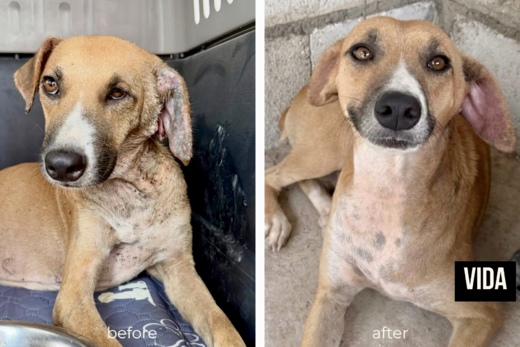
Vida_PortlandPupsJa
- Puerto Rico’s animal welfare law allows fines of up to US$20,000 (C$27,900) and prison terms of up to 15 years for serious cruelty offences.
- The Cayman Islands has penalties of up to CI$4,000 (C$6,700) and one year in prison.
- The Bahamas enacted its Animal Protection and Control Act in 2010, with fines of up to B$20,000 (C$28,000) and up to 12 months in prison.
- Trinidad and Tobago’s animal welfare reforms took effect in 2021, with fines of up to TT$200,000 (C$41,100) and up to five years in prison.
- Barbados’s Prevention of Cruelty to Animals Act 2002 carries penalties of up to BBD$10,000 (C$6,900) and up to 12 months in prison.
- Guyana’s 2018 Animal Welfare Act provides penalties of up to GYD$100,000 (C$670) and six months in prison.
- Jamaica’s Cruelty to Animals Act dates back to 1904 and was last amended in 1995, with a maximum penalty of just J$1,000 (C$9). Yes, you read that correctly.
Jessi Williams, founder of PortlandPupsJA, has helped well over 200 dogs through rescue, rehabilitation, re-homing and sterilization. Jessi shared several deeply disturbing stories with me, “I have witnessed some truly heartbreaking treatment of street animals, from both adults and children. I have seen children call dogs over as though they want to play with them, only to kick them with all their strength. I have seen elderly men come to the park with slingshots and pockets full of rocks to shoot at stray dogs. I have seen people simply kick a stray dog as it walks past them or throw an object at it for absolutely no reason.”
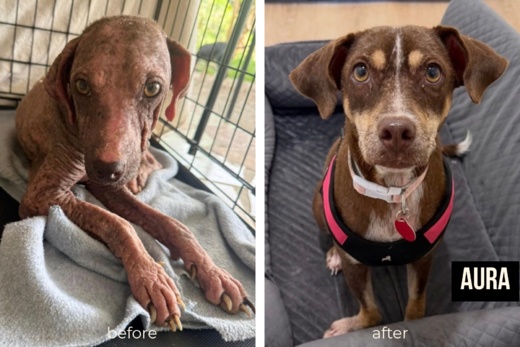
Aura_PortlandPupsJa CopassionKind
But one dog will remain with her forever. Her six-year-old son came home from school and told her about a dog with “no face.” When Jessi found him, he was severely emaciated. His eyes and nose were gone and much of his face had been destroyed. His injuries appeared consistent with a sharp-force injury, possibly from a machete and had developed into a massive maggot infested wound. People in the community had watched him suffering for at least two weeks, some threw stones at him to make him leave. Jessi contacted a veterinarian immediately, but his injuries were too severe, and he had to be humanely euthanized. “Abuse and neglect usually isn’t reported at all, because people already know nothing will be done. There is very little faith in the police or authorities when it comes to animal cruelty, neglect or poisoning.”
Suffering is not limited to stray animals. Rescuers often encounter owned dogs tied in backyards with no shade, food, clean water or veterinary care. Some are skeletal, covered in parasites, suffering from devastating injuries while people continue to watch. “We also see dogs being left outside during extreme weather, including hurricanes, sometimes tied to trees or structures with little or no shelter.”
Montego Bay Animal Haven, a rescue run by Sabria Hector, is caring for more than 100 animals and also receives calls involving neglected horses and livestock. Recently, The Haven learned about a pregnant cow who was struck by a vehicle and left suffering beside the road with broken legs for approximately a week. The Haven immediately contacted its veterinarian and offered to cover the full cost of euthanasia. The authorities had reportedly not contacted a veterinarian because the owner could not be located. The cow was eventually shot by the police. “An animal in obvious distress should not have to become a social media controversy before someone decides to help,” Hector told me.
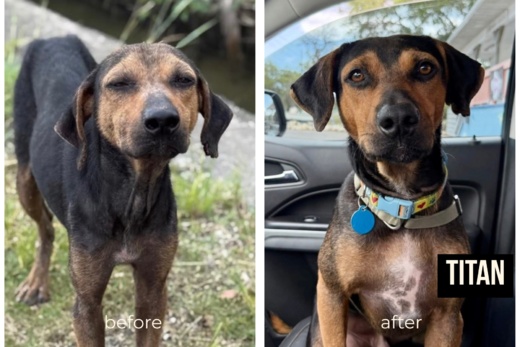
Titan_PortlandPupsJa
Aja Nikiya Estro, a global humanitarian and founder of Compassion Kind Foundation, has worked extensively with rescuers and communities across Jamaica, The Bahamas, the Dominican Republic and Puerto Rico. Her work includes emergency veterinary care, sterilization, fostering, adoption and addressing the systemic causes of animal suffering.
“Poisoning is one of the most disturbing animal welfare problems we encounter” Estro explains. Paraquat, widely known by the brand name Gramoxone, banned in over 70 countries, is freely available in Jamaica. The Jamaica Veterinary Medical Association describes paraquat poisoning in dogs as extremely serious, causing kidney and liver damage, destruction of lung tissue, severe breathing problems and slow agonizing death which can take up to four weeks. Poisoned bait can also threaten other mammals, wildlife, birds and potentially children. This is not simply an animal welfare issue. It can contaminate the soil and become a public safety issue.
The rescuers I spoke with all agreed that irresponsible ownership and completely unregulated breeding are major contributors to the crisis and describe frequent deliberate cruelty, including animals being intentionally struck by vehicles, poisoned, chopped with machetes or burned with boiling water. Hector adds that cruelty does not exist in isolation, and that how a society treats its most vulnerable members, including animals, children and the elderly, reflects something larger.
Estro emphasizes that Jamaica does not lack compassionate people. “Some of the most compassionate people I have ever worked beside are Jamaican rescuers. They are fighting every day for animals with extraordinarily limited resources”. What is missing is the infrastructure around them: updated legislation, meaningful enforcement, affordable veterinary care, accessible sterilization programs, humane emergency response and sufficient government support. At present, much of that burden falls on rescuers themselves but rescue alone cannot solve a crisis of this scale. Animal rescues cannot be expected to function indefinitely as the emergency response system while depending primarily on donations from people who happen to see their stories on Instagram. Government support matters, yet stronger laws on paper are not enough, they must be matched by enforcement.


People need to know where to report cruelty, who is responsible for investigating it and what happens afterward. Estro recommends trained investigators, clear evidence protocols, cooperation between police, veterinarians and animal welfare organizations, and accountability when serious cruelty occurs.
“ Spay and neuter must become a national priority” Estro explains, including mobile clinics capable of reaching rural communities, greater access to emergency veterinary treatment and humane euthanasia.
The three rescuers agreed that change has to start with stronger laws, enforcement and humane education. Research shows that a child’s positive attachment to a pet dog can provide socio-emotional benefits for children via stress buffering as well as improvements in child health and well-being.
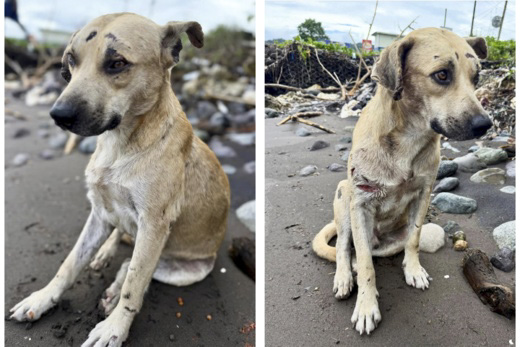
PortlandPupsJa
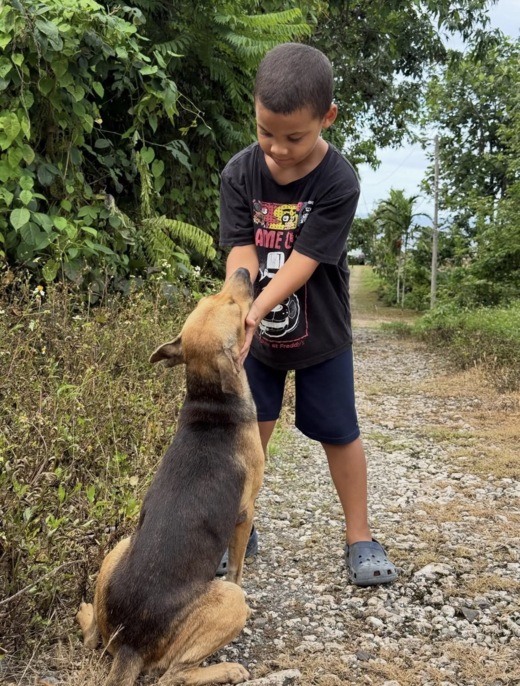
Schools across the Caribbean could teach responsible animal care, compassion and safe interaction with animals. PortlandPupsJA is already working toward school outreach, with veterinarians willing to speak with students about animal care and veterinary medicine as a possible career. Research on humane education suggests that children who are cruel to animals may themselves have witnessed or experienced violence. Animal-related lessons that teach respect, kindness and compassion can help interrupt the development of aggressive behaviour, foster empathy and reduce the likelihood of aggression toward both animals and people.
Laws punish cruelty after it happens. Education may help prevent some of it from beginning. Everyone can learn not to kick, stone, or deliberately hurt animals, recognize when an animal needs help, that mange is a treatable medical condition and poisoning is not population control. A pedigree does not determine the value of a life. The mixed-breed street dogs commonly called mongrels or brownies are extraordinarily intelligent, loyal and remarkably resilient. “Mongrels deserve a cultural shift in how they are viewed.” Estro adds.

PortlandPupsJa
Caribbean people have enormous pride in their music, athletes, food, history and culture. Perhaps our “Royal Caribbean Terriers” and animal welfare can become another source of pride. In a region where faith is such an important part of life, compassion should extend to all of God’s creatures. We do not have to love every animal, but we can choose not to hurt them.
“A sick dog does not need a stone. It needs help.” Aja Estro
@portlandpupsja @compassioncurator @montegobayanimalhaven
For readers who want to help:
In the Caribbean, adopt, foster, support sterilization programs, donate food and supplies, volunteer and report cruelty. Your help can be as simple as leaving water out for street animals during a hot day. Businesses can help by sponsoring veterinary clinics, donating food and supplies, or supporting community education programs.
People in Canada can sponsor veterinary treatment or sterilization online, donate to reputable rescues, adopt, or act as flight chaperones when animals are travelling to approved homes.
Please consider signing the petition calling for action against the poisoning of dogs in Jamaica: Sign the petition.