

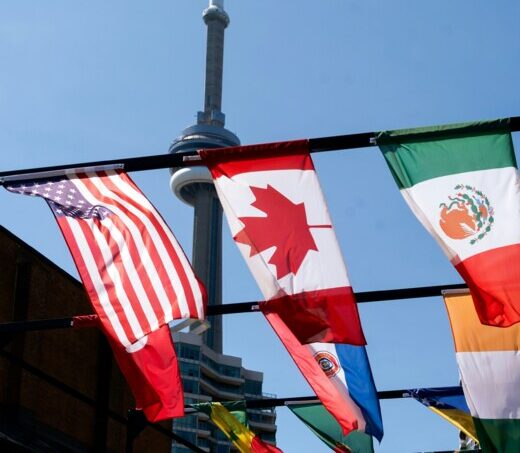

According to Bloomberg Businessweek, many of America’s largest corporations have seen profitability rise significantly since the Trump administration intensified its use of tariffs as a diplomatic and financial weapon. At the same time, workers around the world have experienced rising living costs, ranging from modest increases to more than 25% in some regions. The argument is clear: the current Republican administration appears to be advancing the interests of America’s business community while many ordinary citizens shoulder the financial burden.
The United States seems to be returning to an era when corporations were also major regional financiers and influential players in public policy. Between the late 19th century and the early 20th century, many company towns depended almost entirely on a single corporation for employment, investment, and even retail stores where workers purchased their daily necessities. Economic power often translated into political influence.
Today, America appears determined to reclaim what was lost during decades of globalization. Manufacturing, technology, and industrial production gradually shifted first to Japan and later to China, generating enormous profits for multinational corporations while much of the environmental cost was borne overseas. Corporations exist to generate profits, and throughout globalization they followed that mandate relentlessly.
Now those jobs and investments are beginning to flow back to the United States, Canada, and parts of Europe. One reason is China’s emergence as both a financial and geopolitical rival. With a gross domestic product approaching US$19 trillion, China has evolved into an economic power capable of pursuing political influence alongside economic growth. Unlike many Western corporations, whose success is measured primarily through quarterly profits, China often appears willing to accept short-term financial losses in pursuit of longer-term strategic or diplomatic gains.
Will America once again become the world’s dominant production hub? Skilled workers in the United States continue to earn competitive wages and benefits, but many less-educated workers remain excluded from the opportunities enjoyed by the middle class. Rebuilding a stronger manufacturing sector could help revitalize that middle class, but it does not solve every economic challenge facing the country.

One of those challenges is America’s national debt. The United States continues to carry one of the largest debt burdens in the world, while annual government spending significantly exceeds federal revenues. Although tariffs generate billions of dollars for the U.S. Treasury, they represent only a fraction of the revenue required to meaningfully reduce the national debt.
From this perspective, tariffs serve a broader strategic purpose than simply raising government revenue. They have become diplomatic and economic tools used to pressure competitors without resorting to military action. Instead of missiles or invasions, governments can use tariffs to influence foreign leaders, reshape supply chains, and weaken competing economies while avoiding armed conflict.
Yet tariffs do not affect only governments and multinational corporations. They also reach consumers. Higher import costs often translate into higher prices for fuel, food, household goods, and energy. Whether the goal is protecting domestic industries or advancing geopolitical objectives, consumers frequently pay part of the cost through inflation and reduced purchasing power.
Canada faces difficult choices in this environment. Provincial premiers have met repeatedly to discuss responses to American tariffs, but symbolic retaliation—such as limiting imports of California wine or Kentucky bourbon—is unlikely to alter U.S. trade policy and may invite further countermeasures. For smaller economies, prolonged trade conflicts are difficult to win through unilateral action.
Instead, Canada’s long-term strength may lie in building stronger regional and international partnerships. Broader trade alliances, diversified export markets, and greater economic cooperation with like-minded nations may prove more effective than isolated responses to escalating tariff disputes.
Whether tariffs ultimately strengthen America or reshape the global balance of power remains uncertain. What is clear is that their consequences extend far beyond government policy. They influence businesses, workers, consumers, and international relationships alike. In an increasingly interconnected world, cooperation may ultimately provide smaller nations with their strongest defence against economic pressure.
Stay in the loop with exclusive news, stories, and insights—delivered straight to your inbox. No fluff, just real content that matters. Sign up today!