


The shootings that occurred during Toronto’s annual Salsa on St. Clair festival on Saturday, July 12th, 2026, sparked widespread reaction from political leaders, police officials and members of the community. The violence led to the cancellation of Sunday’s festival as Toronto Police secured the area and launched a homicide investigation.
Two people were killed, and five others were injured after gunfire erupted near St. Clair Avenue West and Arlington Avenue. Police estimated that approximately 13,000 people were in the area after 8:00 p.m. when the shooting occurred.
Public responses came quickly from: Toronto Police Chief Myron Demkiw, Toronto Mayor Olivia Chow, Councillor Mike Colle, mayoral hopeful Brad Bradford, and the Canadian Coalition for Firearm Rights (CCFR).
Chief Demkiw addressed the media following the shooting, describing the attack as a brazen act of violence carried out in a crowded public space. He acknowledged that the incident had shaken “The sense of safety and security that Torontonians expect and deserve.” He also renewed his call for stronger criminal justice reforms, arguing that those responsible for deadly criminal acts should face first-degree murder charges whenever appropriate.
Toronto Police also stated that officers would maintain a visible presence at events across the city while adjusting security plans based on intelligence and evolving threats.
Mayor Olivia Chow released a video urging federal Public Safety Minister Gary Anandasangaree to strengthen efforts to stem the flow of illegal firearms entering Toronto from the United States. Meanwhile, the Canadian Coalition for Firearm Rights criticized the federal Liberal government’s gun-ban policies, arguing they have failed to curb the flow of illegal weapons.
According to WaveRoom, Toronto Police identified the two homicide victims as 25-year-old Shaquan Quashie and 20-year-old Cesar Vernaza. Police indicated the two men were known to one another and appeared to have been targeted when gunfire broke out between two groups. Five bystanders were also hospitalized.
Among those present that evening was Mary Galvan, who helped organize the festival’s first media launch more than two decades ago while working with TLN and Ancaster Pope Advertising. Reflecting on the tragedy, she wrote on Facebook, “My heart breaks for every victim, every family, every witness, every vendor, and everyone whose life was forever changed that night. This tragedy does not define the spirit of this community, but it is now forever part of its story.”

Educator and community organizer Derek Chica also urged caution in how the incident was reported. Writing on Facebook, he expressed hope that police would conduct a thorough investigation while criticizing early media speculation linking the shooting to gangs or social media conflicts without confirmed evidence. He argued that unsupported assumptions risk fueling fear, racism and further division at a time when communities should be focused on healing.
Ironically, the tragedy occurred during a year in which Toronto has seen a decline in shootings. According to Chief Demkiw, shootings are down 26% compared with the same period in 2025. As reported by the Toronto Star, he acknowledged that despite encouraging long-term trends, “A weekend like this shakes our community.”
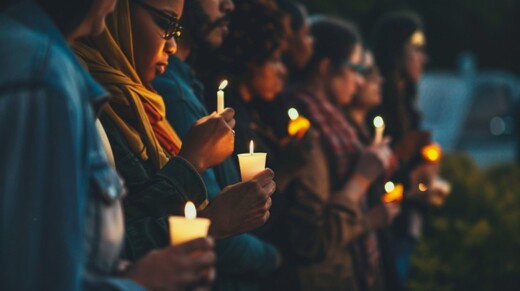
At a vigil held near St. Matthew’s United Church, Pastor Miguel Rojas reminded those gathered that healing requires collective strength. “Gun violence destroys life and leaves wounds that can’t always be seen. Pain will not have the final word.”
Dr. Kathy Kamkar, clinical psychologist at the Centre for Addiction and Mental Health (CAMH), also emphasized the invisible effects of violence. She noted that witnessing a shooting can be psychologically traumatic even without physical injury, explaining that hearing gunfire, fleeing for safety or fearing for one’s life can trigger lasting trauma responses.
Community leaders continued the conversation during a July 20th, 2026, roundtable at the Columbus Centre attended by representatives from: the Toronto Police Service, Telelatino Network (TLN), and local organizations. Participants discussed bail reform, illegal firearms, public safety and broader community concerns. Although Mayor Chow and Chief Demkiw were not present, organizers viewed the discussion as an important first step toward long-term solutions.
For many residents, the shootings have permanently altered the memory of what has long been one of Toronto’s most vibrant and peaceful neighbourhood festivals. While the violence will remain part of the community’s history, its future will ultimately be defined not only by tragedy, but by healing, compassion and the collective determination to ensure that such violence is never repeated.
Stay in the loop with exclusive news, stories, and insights—delivered straight to your inbox. No fluff, just real content that matters. Sign up today!