

Connect with us

Subscribe

Subscribe

News & Views

Humans living on Mars? Pushing the boundaries of human knowledge and exploration

BY SIMONE J. SMITH

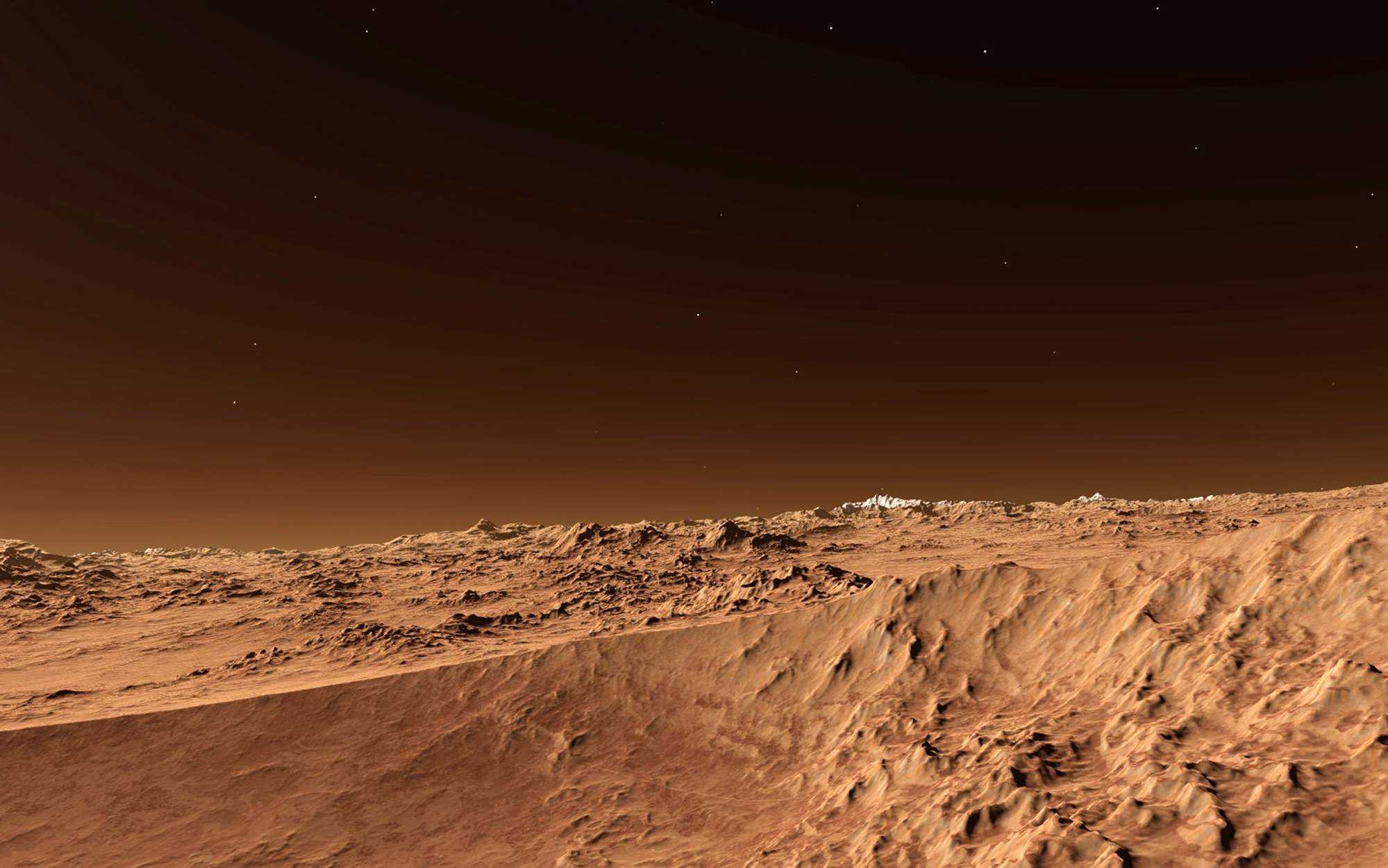
It seems like everyone has Mars on their mind these days; there was a point in time when if we spoke about Mars, there was talk about “When Martians Attack,” and we would default to thoughts of a science fiction movie. Now, real questions are being asked about the possibility of humans living on Mars.

Is it possible?

The answer is yes—but not easily. There are many challenging obstacles in the way: getting to and from Mars, surviving the harsh environment, and producing food, water, and fuel.

In recent years, SpaceX CEO Elon Musk has spoken and written about wanting to have a city of a million people on Mars by 2050. That may sound astronomically ambitious considering humans have never set foot on the Martian surface. This of course leads to more questions: how long would it take for humans to colonize another planet, and could it ever be possible for people to colonize worlds outside the solar system?

Elon Musk published a plan, which he unveiled at a conference in Mexico (September 2016), in the journal “New Space.” In Musk’s commentary, titled “Making Humanity a Multi-Planetary Species” he wrote about his vision of having 1,000 or more ITS spaceships, each carrying 100 or more people. The idea would be to get one million people to Mars within the next 50 to 100 years.

Serkan Saydam (Deputy Director of the Australian Centre for Space Engineering Research, and a Professor at the University of New South Wales in Sydney), shared his thoughts with Live Science, “I believe by 2050 we will have a human colony on Mars.”

Saydam is a mining engineer who specializes in researching future mining.  According to Saydam, the first major step in establishing a successful Mars colony will be water, and that can be extracted from ice and/or hydrated minerals. He thinks water will then facilitate agriculture and then there will be the ability to grow food. Hydrogen from the ice and minerals could be used as an energy source for rocket propellant.

As usual, China seems to be at the helm of technology and has reported that they plan to start sending human crews to Mars in 2033. NASA aims to send astronauts there by the late 2030s or early 2040s. Once humans get there, the next step could be to build a colony.

Scientists have discovered that there are more hospitable new homes to be found on planets beyond our solar system, called exoplanets. The problem with exoplanets is that they are very, very far away. We haven’t even sent a spacecraft to an exoplanet, and the only probes to leave our solar system were Voyager 1 and 2, which took 35 years, and 41 years respectively, to go interstellar. Exoplanets are much farther away.

Why, you might be asking, why are humans interested in colonizing planets?

Well, there are a few reasons: there are those who think that it is an essential step towards ensuring the survival of our species in case of a catastrophic event on Earth, such as a massive asteroid impact or a super volcanic eruption. For scientists and researchers, exploring and colonizing other planets can expand our knowledge of the universe and potentially unlock new technologies and resources. For example, studying the atmosphere of Mars may help us better understand the history of our own planet and potentially provide insight into how to mitigate climate change.

Finally, there may be economic benefits to colonizing other planets, such as mining for rare metals and minerals or establishing new markets for goods and services.

The idea of exploring and inhabiting other worlds has long been a fascination of human culture, and many people see it as an exciting and noble endeavor to push the boundaries of human knowledge and exploration.

Newsletter Signup

Stay in the loop with exclusive news, stories, and insights—delivered straight to your inbox. No fluff, just real content that matters. Sign up today!


Written By

We, as humans are guaranteed certain things in life: stressors, taxes, bills and death are the first thoughts that pop to mind. It is not uncommon that many people find a hard time dealing with these daily life stressors, and at times will find themselves losing control over their lives. Simone Jennifer Smith’s great passion is using the gifts that have been given to her, to help educate her clients on how to live meaningful lives. The Hear to Help Team consists of powerfully motivated individuals, who like Simone, see that there is a need in this world; a need for real connection. As the founder and Director of Hear 2 Help, Simone leads a team that goes out into the community day to day, servicing families with their educational, legal and mental health needs.Her dedication shows in her Toronto Caribbean newspaper articles, and in her role as a host on the TCN TV Network.

Click to comment

Leave a Reply

Your email address will not be published. Required fields are marked *

Trending

Why LGBTQ youth still hurt

News & Views

How to manage life seasons and transitions – Part II

Personal Development

Why sleep matters more than students think

Junior Contributors

Why Hamilton’s “Precious Metals” Is the most emotionally intelligent exhibit you will experience this year

Likes & Shares

Advertisement
Newsletter Signup

Stay in the loop with exclusive news, stories, and insights—delivered straight to your inbox. No fluff, just real content that matters. Sign up today!

Legal and Advertising Disclaimer: Advertisements, sponsored content, business listings and other promotional materials are supplied by third parties. Their publication does not constitute an endorsement, recommendation, representation, warranty or guarantee by TCN Now Inc. Advertisers and content providers are responsible for the accuracy, legality and substantiation of their claims and for obtaining all necessary copyright, trademark, privacy and other permissions. To the fullest extent permitted by law, TCN Now Inc., its directors, officers, employees, contractors and affiliates shall not be liable for any loss, damage, cost, expense or claim arising from third-party advertisements, products, services or promotional content. TCN Now Inc. reserves the right to refuse, edit, suspend or remove advertising or promotional content at its discretion. Editorial and Content Disclaimer: The opinions, commentary and viewpoints expressed in signed articles, columns, letters, guest submissions and other contributor content belong to the respective authors and do not necessarily reflect the opinions or views of TCN Now Inc., its directors, officers, employees, editors or affiliates. Content published by TCN Now Inc. is provided for general informational purposes only and is not intended as legal, financial, medical or other professional advice. While reasonable efforts are made to ensure accuracy, TCN Now Inc. does not guarantee that all information will be complete, current or free from error. To the fullest extent permitted by law, TCN Now Inc. disclaims liability for losses or claims arising from reliance upon contributor opinions, third-party submissions or general informational content. Copyright © 2026 TCN Now Inc. All rights reserved. Unless otherwise stated, the text, photographs, graphics, logos, designs and other original content appearing on this website are owned by or licensed to TCN Now Inc. and may not be copied, reproduced, republished, distributed, modified or commercially used without prior written permission, except as otherwise permitted by law. Third-party names, logos, trademarks and content remain the property of their respective owners.

Connect
Newsletter Signup

Stay in the loop with exclusive news, stories, and insights—delivered straight to your inbox. No fluff, just real content that matters. Sign up today!