Classic Man
Jason Panton: Decoding Jamaica’s Cultural Phenomenon
“There was certainly a feeling in myself that this is not the final destination. This is a stop, but this is not my final stop.”

In March 2022, in the heart of Kingston, Jamaica, a physical space opened that brought a decade of cultural strategy into living form. The Dubwise Café, a plant-based culinary and live-performance space, was designed as a functional culture yard engineered to connect food, music, and physical community.
Steam rises from natural Rastafarian dishes while sound-system basslines reverberate through the space. Here, established artists and emerging talents test unreleased tracks before an audience of local tastemakers and international travelers. Beyond the atmosphere, the café operates as a deliberate business node; a sustainable space generating real revenue while preserving the raw heartbeat of Jamaican reggae culture.
Observing the seamless blend of design, roots culture, and enterprise at Dubwise Café poses a larger question: How did a visual artist from Kingston and Miami build a global cultural platform spanning fine art, streetwear, corporate marketing, major-label A&R, and international event series? Long before social media popularized creator strategy, Jason Panton was decoding audience attention. His trajectory is not a story of viral luck or rapid fame. Behind his visible brand lies a methodical study of audience psychology, identity framing, and the mechanics of turning trust into brand equity. To understand his impact, one must look beyond celebrating his portfolio and examine the precise operational machinery behind his evolution.
Born in Kingston, Jason moved to Miami at age eight or nine. He grew up in an immigrant household led by his grandmother, saturated with traditional Jamaican customs, weekend family gatherings, reggae music, and uncles drinking rum and coke.

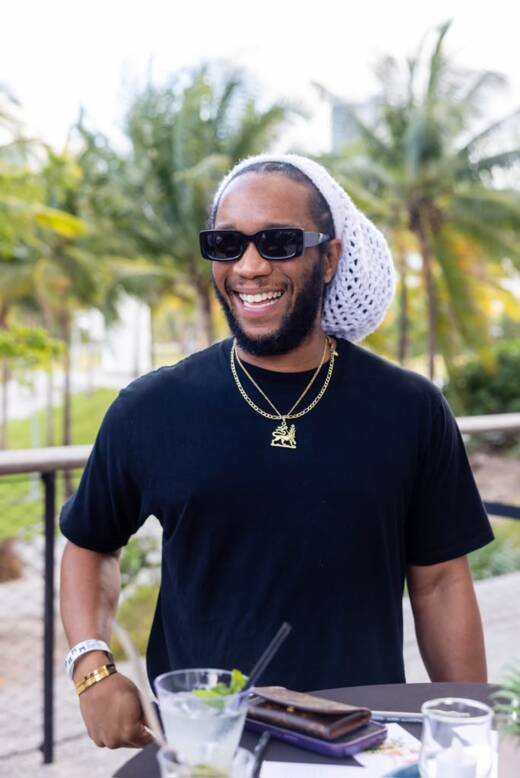
Photo Courtesy of Jason Panton
Living in South Florida, he inhabited America without abandoning his roots, developing what he describes as a hybrid engine perspective; a dual capability that provided distinct gas mileage and horsepower in global cultural spaces. Between the ages of eight and 16, Jason’s relationship with his father was shaped by circumstances beyond his own making. His father was never absent from his heart, but the realities within the family made that connection difficult. Under the firm hand of his disciplinarian mother, Jason learned early how to stand on his own two feet. He grew into a young man who questioned the rules he inherited, trusted his own instincts, and refused to be boxed in by society’s expectations. It forged an independence, resilience and quiet strength that would become central to the man he is today.
His primary gift was visual: while others processed the world through sound, Jason’s talent lived in his eyes and hands, laying the foundation for a career in visual art and brand architecture.
Jason earned a Bachelor of Arts in Fine and Studio Arts from the University of Central Florida and later pursued a Master of Science in Interdisciplinary Arts & Arts Management at Nova Southeastern University. Under the guidance of faculty members like Dr. Altman, a course in creative entrepreneurship sparked his first major epiphany: artistic creation could be structured into a scalable, revenue-generating business.

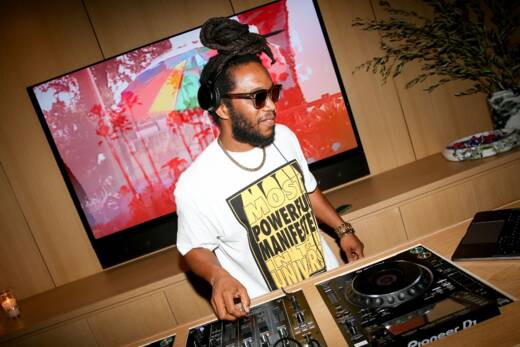
Photo Courtesy of Jason Panton
Soon after, while creating graphics for a friend’s apparel line, his partner (Haitian-Canadian entrepreneur Lina Asselian) asked why he was building value for others instead of owning his own entity. When a proposal to secure a partnership stake in his friend’s brand was declined by Ryan Abrahams, Jason converted the setback into momentum. He launched I&I Supply Co., a Jamaican-inspired fashion line fusing reggae imagery with streetwear design, earning a dedicated cult following across Florida and the Caribbean.
Yet early artistic momentum did not eliminate financial friction. During slow periods, Jason took unglamorous corporate jobs: assembling mortgage paper portfolios in the back room of a bank, installing air conditioning units during commercial mall construction, and handling phone reservations for AirTran and Frontier Airlines. He refused to disrespect the work, treating every job with strict discipline while recognizing its limits. “This is a stop, but this is not my final stop,” he kept in mind, constantly searching for scalable leverage.


His operational shift came when he read Tim Ferriss’s The 4-Hour Workweek. The book reshaped his understanding of time versus money, teaching him that continuous manual labour cannot build wealth; true enterprise requires systems, leverage, and decoupled brand equity.
At age 22, an artist residency at the Edna Manley College of the Visual and Performing Arts in Kingston via Diaspora Vibe Gallery re-anchored Jason in Jamaica. Meeting multi-hyphenate young Jamaicans who painted, sang, and designed made him realize he was part of a larger collective tribe. Driven to build infrastructure for local talent, he co-founded Base Kingston with Cezar Cunningham, establishing Jamaica’s first streetwear boutique carrying international accounts like LRG and RockSmith.
Seeing that emerging musical artists lacked dedicated platforms, he produced “Live from Kingston,” a showcase that platformed groundbreaking talents like: Protoje, Chronixx, Jesse Royal, Patrice, and Kabaka Pyramid.
In 2010, Cedella Marley hired Jason on the spot after viewing his design portfolio. Over six years collaborating with Marley family brands, he designed retail collections for Barney’s and served as a lead designer on the 2012 Puma Jamaican Olympic track-and-field kit alongside Cedella Marley. Working at this scale taught him a crucial lesson in brand management: replacing solo ego (“I”) with collective execution (“we”). Jaon applied his hybrid perspective to corporate brand strategy and event marketing, working with major entities including: Marley Beverage Company, Marley Coffee, House of Marley, Red Bull, Guinness, Red Stripe, Def Jam Records, and VP Records. His signature advantage is his ability to translate authentic cultural heritage into high-concept commercial programs that global brands can execute without stripping away cultural substance.


Photo Courtesy of Jason Panton
Building this influence required significant personal sacrifice. Jason had to navigate the tension between North American individualistic business models and Jamaican communal principles. He repeatedly suppressed personal ego to serve as a behind-the-scenes catalyst for other artists and brands. He bore the financial and operational risk of pioneering independent retail, launching international event logistics, and self-funding cultural showcases before corporate sponsors recognized the value of the reggae revival movement.
In 2013, Jason co-founded Dubwise Jamaica alongside selector Yaadcore and Protoje. Starting in Kingston, the sound-system platform grew into a weekly residency in Miami and monthly events across North America, Canada, Africa, and the Caribbean. Expanding into music production and A&R, he served as A&R, writer, and producer on Jesse Royal’s album Royal, which earned a Grammy nomination for Best Reggae Album. By systematically converting audience trust into cultural identity and strategic influence, Jason established a self-sustaining brand engine.
Jason’s trajectory is Act II of an expanding enterprise. Through Dubwise Café, he is building a permanent, revenue-generating yard to preserve reggae culture in Jamaica first. For Jason, true elevation is creating cultural systems that generate long-term value, inspire upcoming creators, and secure a lasting legacy for his children.