Entertainment
Black stories need more spaces; TPAFF 2026
“Everyone looked so good, like it was Wakanda!”

On Friday August 16th, 2026 a friend treated me to the final day of the fourth annual Toronto Pan-Afrikan Film Festival (TPAFF), at the Small World Centre, inside YoungPlace Artscape on Shaw Street. Two other friends met us there for what turned out to be an enjoyable day out, although none of us planned to spend any part of it discussing the infrastructure and promotion of Toronto’s Black Arts scenes.
After moving back into the Greater Toronto Area, I have spent these last few years reacclimatizing myself and seeking out the spaces that I had missed while I was away. I had found great networks for community and cultural events, and yet, before receiving that invitation, I had never heard of TPAFF, and that bothered me.
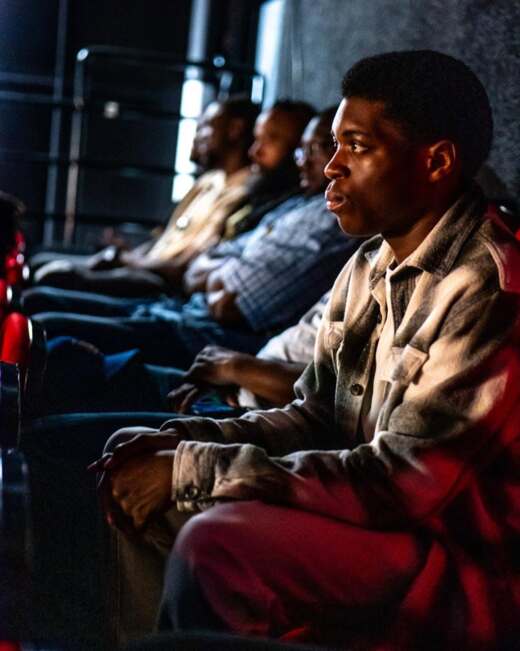
The venue was a nice, bright space, the event organizers were visible and vocal, the theatre was intimate and full, and the audience was social and engaged. All those positive mentions, and I was still a part of a group who had missed not one, nor two, but three prior launches of TPAFF.
So, my question became: How many meaningful events are happening in our community that never make it through all the channels needed to reach us? An insightful discussion with the TPAFF Founder, Lori Beazer, helped me unpack the how and why.
TPAFF was brought to life in 2023 after Beazer looked at Toronto’s Little Jamaica neighbourhood (Eglinton Avenue West, from Keele Street in the west to Marlee Avenue in the east) and asked herself what was missing. Her answer was a Black film festival rooted in four pillars: African Liberation, Spirituality, Black displacement, and exploitation.
That framework supported the festival’s aim to continue celebrating Black people’s accomplishments, through film, during the month of Emancipation (August). The festival’s theme “Exodus” was represented by stories of joy, faith, family, intergenerational wisdom, aging, trauma, taboos, migration, identity, our missing Black boys, history, and survival. It was a full day, and people remained seated into the evening for conversations afterward.
With what appeared to be a satisfying wrap-up to a successful weekend, there was no indication of any obstacles that the festival overcame in order to move forward. Beazer shared that after three years of free admission, funding challenges meant she had to shoulder the financial burden and charge for tickets for the first time, which presented an air of unfamiliar uncertainty.

Photos Courtesy of IUIC Toronto
When ticket sales went online, people made their purchases and then in the final hour, additional support came through which was a relief. Most importantly, when the big weekend arrived, we showed up representing the Black community with style and lasting inspiration.
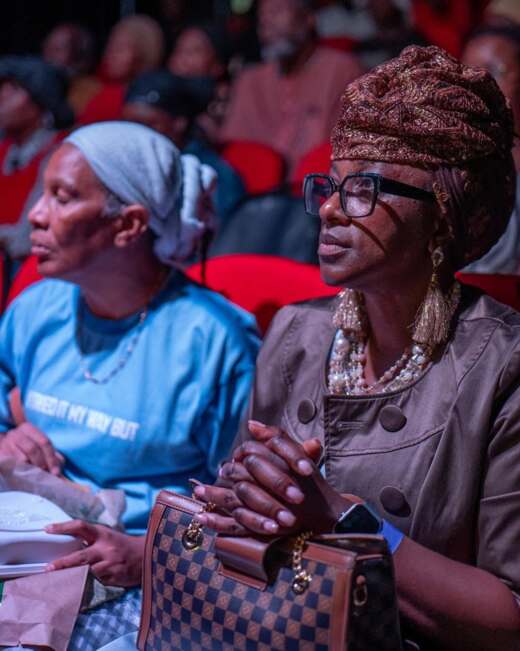
Beazer described that there was something noticeably different about this years’ crowd. She said the opening day felt spectacular, and “Everyone looked so good, like it was Wakanda!” While some people were discovering TPAFF for the first time, others were already aware and invested in Black film, and throughout the space there was an intentionality that was both seen and felt.
People paid, people showed up, and they stayed engaged. Some attempted to purchase tickets after capacity was reached but could not get seats. The TPAFF Instagram page expressed gratitude to the Toronto and USA for buying 96% of 3-day tickets with 100% of their Sunday tickets sold for the finale.
For Beazer, that demonstrated something important, commitment. Commitment is an integral part of the success and longevity of the Black community. Our community does not only need events created for it, but also needs spaces it can afford to enter, stories in which it can recognize itself, opportunities to participate and pathways for its own artists to be seen authentically and without any oppressive conditions, or restraints under the guise of support.


Accessibility is also important because community programming should be affordable, and it is necessary to state that accessibility does not mean reduced value. Free events still require support because somebody’s labour, money, planning and time, and organizers need resources since venues cost money, and artists deserve to be paid.
Beazer’s powerful sense of self, identity and respect, resonated highly with me. “I’m a Pan-Africanist,” she told me. I also admired her adherence to celebrating Black people doing similar work, as she spoke about Toronto’s other Black and Caribbean film festivals, and praised collaboration between organizations rather than treating another festival’s success as competition. “Why reinvent the wheel? Let us spin the wheel together.”
But what told me more about Beazer was another description she offered of herself saying “I am not in the arts. I just like to really make cool things happen.”
She does that. Her community work extends beyond film into initiatives that create physical spaces for Black people and friends to gather, sell, organize and build, such as the Afro-Caribbean Farmers’ Market. The common thread I heard throughout our conversation was making space and that distinction matters.
Photos Courtesy of IUIC Toronto
For its fifth year, Beazer wants TPAFF to become “Bigger, bolder and Blacker,” with broader Pan-African representation and an even stronger experience surrounding the films themselves. Her invitation to the community was simply to “Jump in and be a part of the magic,” and I intend to. After finally finding TPAFF, my biggest question is no longer why I had not heard about it sooner. It is now: what can we do together, and how many other spaces like it are waiting for us to find each other?
Toronto has an abundance of Black organizations, artists, organizers, stories, ideas, and audiences, and sometimes so much is happening in separate pockets that the people who would support do not always know where to look or they have to choose one thing over the other due to unnecessary conflicts.
Perhaps building community, in 2026 and beyond, requires more than creating another good thing. We need to do better as a community at connecting the good things that already exist and pool resources. Which creators, organizations, or initiatives in the community can you collaborate with in order to go further together?
To keep up to date with Toronto Pan-Afrikan Film Festival (TPAFF), visit tpaff.com