

Caribbean families have carried medicinal knowledge through enslavement, migration and the demands of everyday care, passing down remedies whose ingredients and meanings vary across communities. As the World Health Organization calls for greater investment in traditional medicine research, the region faces a familiar question: how will the people who preserved this knowledge share in the authority and benefits that scientific attention brings?
WHO’s September 17th, 2026, announcement identifies an imbalance: traditional, complementary and integrative medicine receives less than 1% of global health research funding despite widespread use. Its new research agenda calls for stronger evidence alongside protections for Indigenous knowledge and equitable sharing of benefits.
Understanding what that means for the Caribbean requires acknowledging how our healing traditions have developed. Indigenous plant knowledge intersected with African healing practices preserved through enslavement, European folk medicine, and traditions brought through Indian indenture and migration. Bush medicine refers to plant-based remedies throughout our history, including household preparations and treatments provided by healers. Communities adapted practices to available plants while retaining distinct understandings of illness and healing.
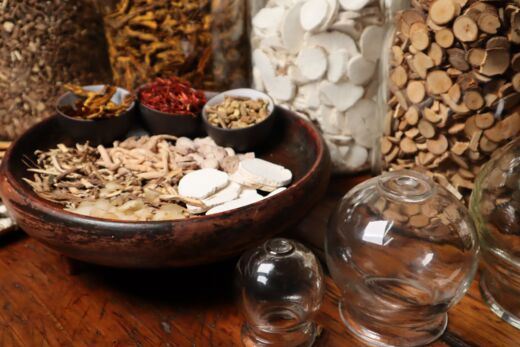
Photo Courtesy of Chinese Medicine Podcast
Commercial interest accompanied these exchanges from the colonial period. Historian Esteban Mira Caballos documented how Spanish colonizers recognized the economic value of Indigenous medicine in Hispaniola and exported medicinal plants and preparations for Spain. That history gives present questions about consent and ownership particular weight: sharing knowledge with researchers should come with meaningful authority over its subsequent use.
Existing research also reveals how these traditions operate within contemporary healthcare. A 2021 Western Jamaican study surveyed 60 patients with hypertension or type 2 diabetes and conducted separate focus groups with 25 participants. Participants described continuing prescriptions while using herbs or alternating between treatments; anticipated clinician disapproval sometimes discouraged disclosure. While in Trinidad, a 2017 study of 350 cancer patients at San Fernando General Hospital found that 137 used complementary or alternative approaches, including herbs and spiritual therapies. Of those users, 95.6% reported they had never permanently replaced these approaches with conventional treatment, while only 21.2% had informed their physician.

For Caribbean populations, useful health research should examine how traditional remedies fit into treatment decisions and what makes patients comfortable discussing them. Caribbean institutions already offer a foundation for this work. The TRAMIL program (Program of Applied Research to Popular Medicine in the Caribbean) has documented medicinal plants used in household care since 1982; its research methods have included local groups helping identify the health problems surveys should address. The researchers found distinct plant repertoires across nine Afro-Caribbean, Indigenous, and Mestizo communities, showing why research needs to reflect local knowledge.
That participation should extend to decisions about which questions receive funding and how the knowledge shared through research is used. Our knowledge holders, Herbalists, and Elders deserve payment for their expertise, supported by agreements that establish what can be shared and how benefits will return to their communities. For Caribbean organizations in Toronto, partnerships with researchers across the region could create opportunities to investigate the health concerns of diaspora families while giving those families a meaningful role in shaping the work.
The care taken with these relationships should also guide how traditional medicines are studied. Recording how a remedy is prepared and used preserves knowledge that helps researchers understand its place in people’s lives. Establishing its treatment benefits requires further investigation into the preparation itself, including the amount taken, its effects on conditions and how it interacts with other medicines. However, respecting the tradition also means producing evidence people can use when making decisions about their health.
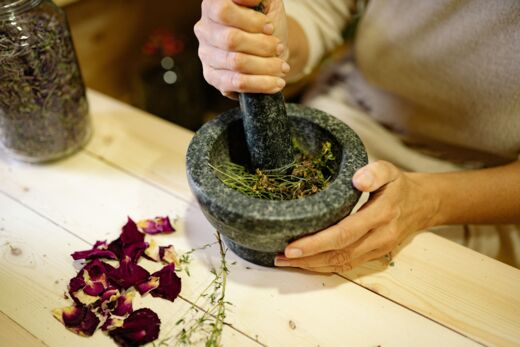
Photographer: Yankrukov
Those decisions already arise in everyday care, whenever someone considers taking a familiar bush remedy alongside a prescription. A conversation with a pharmacist or clinician becomes more useful when it includes the ingredients, how the remedy is prepared and how often it is taken. Patients should feel comfortable asking what evidence supports its use, whether it could affect their medication and which symptoms warrant medical attention. Health Canada recommends discussing natural health products with a health professional because they can cause adverse effects and interact with other treatments.
Anor that conversation to happen openly, clinicians should be willing to listen to what a remedy means to the person using it. The same responsibility applies to researchers seeking access to community knowledge. Taking bush medicine seriously begins with relationships in which knowledge holders help shape the questions and retain authority over what they share. It continues when findings return to communities in language that helps families understand the remedies they use and make informed decisions about their care.
Stay in the loop with exclusive news, stories, and insights—delivered straight to your inbox. No fluff, just real content that matters. Sign up today!