
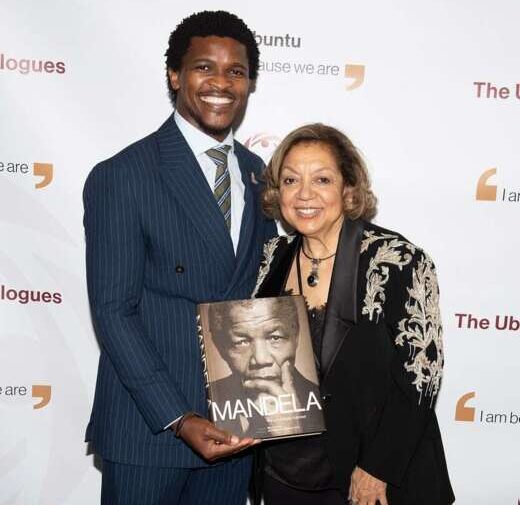

The African philosophy of Ubuntu, often expressed as “I am because we are,” was at the heart of Ubuntu Dialogue 2: Reimagining Education Through Ubuntu, held Friday, October 23rd, at Toronto’s Aga Khan Museum.
Created by Adriaans & Associates, the Ubuntu Dialogues is a public conversation series designed to bring leaders, scholars, artists and changemakers together for courageous conversation, cultural exchange and social impact. The company describes its work as guided by the belief that meaningful events can create meaningful change. The series is grounded in the Ubuntu values of equity, interdependence and global responsibility.
The second dialogue followed the inaugural event in 2025, which featured a conversation between Dr. Siyabulela Mandela and Dr. Kofi Hope. This gathering brought together two university chancellors: Dr. Naledi Pandor of Nelson Mandela University in South Africa and Elder Dr. Claudette Commanda, Chancellor of the University of Ottawa. Their conversation explored the future of higher education, leadership, equity and global responsibility.
Dr. Donette Chin-Loy Chang, Chancellor of Toronto Metropolitan University, was among the initiative’s supporters. In promotional material, she described the series as a reminder that “Our Futures are interconnected.” She added that the dialogues create space for learning and relationship-building across communities and cultures, particularly at a time when division often dominates public discourse. Her message underscored the importance of listening, learning and leading through community.
Why does this conversation matter now? The organizers point to a period of rapid change, technological disruption, growing inequality and increasing pressure on educational institutions to respond with relevance and clarity. Ubuntu offers a framework for considering those challenges by presenting education as relational, leadership as accountable to others, and knowledge as something that should serve collective well-being.
The dialogue highlighted the value of bringing African and Indigenous approaches to knowledge, wisdom and learning into conversation. Among the themes were Ubuntu as a foundation for education, leadership and community-building; the role of universities in shaping ethical and compassionate leaders; and education as a catalyst for reconciliation, inclusion and global understanding.

The philosophy’s emphasis on mutual responsibility also invites institutions to look beyond individual achievement. It asks how universities can create conditions in which students are recognized as whole people, communities are treated as partners in learning, and leadership is judged by its contribution to the common good.
The 90-minute conversation was moderated by Laura Williams, Founder and Managing Partner of Williams HR Law LLP and President and CEO of Williams HR Consulting Inc. Both chancellors responded to questions described as incisive, provocative and inclusive, drawing on their experiences and expertise.
Elder Commanda emphasized that education involves more than the development of the mind; it also reaches into the spirit. Her perspective challenged the tendency, in a technology-focused world, to overlook the spiritual and multidimensional aspects of human life. Dr. Pandor spoke about storytelling in African traditions as a way of exploring questions that extend beyond the material world and speak to who we are at a deeper level.
The discussion considered contemporary questions, including the role of artificial intelligence in education. The exchange offered an opportunity to think critically about how technology, knowledge and human values should intersect in the future of learning.
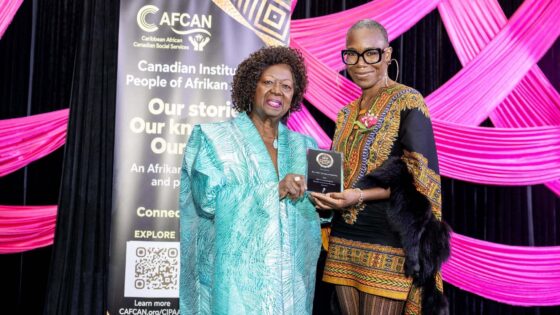
Art was part of the evening’s programme. Award-winning Canadian singer, actor and playwright Jackie Richardson performed with award-winning pianist, composer, arranger and musical director Michael Shand. Spoken-word artist Dr. d’bi.young anitafrika, recognized for work as a dub poet, theatre-maker, biomythicist and liberatory educator, also contributed a performance.
The evening’s artistic contributions complemented the conversation: education is also shaped by culture, memory, storytelling, relationships and the ways communities understand their responsibilities to one another.
Anyone interested in learning more about the Ubuntu Dialogues can visit adriaansandassociates.com. That is Ubuntu’s enduring promise to us all.
Stay in the loop with exclusive news, stories, and insights—delivered straight to your inbox. No fluff, just real content that matters. Sign up today!