


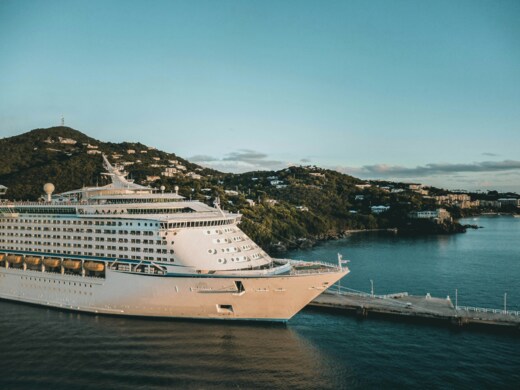

Across the world, urban centres, resort towns, and island communities are experiencing a paradox: a post-pandemic revival driven by tourism, alongside a growing backlash from the very residents expected to benefit. From Florence and Rome to Nice, Paris, Miami, Lake Como, and across the Caribbean, locals are pushing back against what many now see as an unsustainable surge.
The question is uncomfortable but necessary: why protest an industry that employs thousands and fuels local economies? The answer lies in confronting how it has evolved, often without regard for the communities it depends on.
Residents cite a consistent pattern of disruption. When cruise ships dock and release thousands of passengers at once, entire cities can feel overtaken. Streets clog, local services strain, and public spaces become congested to the point of dysfunction. Environmental concerns follow close behind: litter, damage to public and private property, and a visible disregard for the communities being visited.
There are also social costs. Locals report being interrupted in workplaces, approached intrusively in residential areas, and treated as extensions of the tourism experience rather than as people with boundaries. Privacy, both at home and in public is eroded. Over time, these daily pressures harden into resentment.
Financially, the burden is not always where it appears. While visitors often pay premium prices for curated travel experiences, much of that revenue is captured by large tour operators, international corporations, and external booking platforms. Local residents frequently see only a fraction of that income, even as municipal costs: waste management, policing, infrastructure maintenance, rise. In some cases, these costs translate into higher taxes for residents themselves.
Behavioral tensions deepen the divide. Tourists, having paid significant sums, often expect exceptional treatment. When that expectation meets local fatigue (or outright frustration) conflict follows. Incidents of disrespect or hostility can linger in community memory, shaping public opinion and fueling calls for restrictions.
Some governments and tourism boards are attempting to respond. Measures include staggered arrival schedules, caps on visitor numbers, stricter tour regulations, and requirements for environmental contributions or community reinvestment. There are also efforts to improve visitor education, clearer messaging on cultural norms, environmental responsibility, and respectful conduct.
Yet these measures face limits. The financial incentives driving mass tourism remain powerful. Corporations, cruise lines, and large-scale operators continue to generate significant profit, making meaningful reductions difficult to enforce. Economic dependence complicates political will.
There are also public safety considerations. Studies in parts of Europe, including Italy, have suggested seasonal increases in certain types of crime, ranging from petty theft to interpersonal conflict, during peak tourist periods. While figures vary and require careful interpretation, the perception of increased risk alone can heighten tension within communities.
The Caribbean offers a particularly clear case study. Smaller island nations such as Grenada and Saint Lucia operate within tighter geographic and economic constraints. Some have experimented with visitor caps, seasonal restrictions, and stricter entry requirements. Others have implemented zero-tolerance policies for harmful behaviour, including fines and deportation.

However, these policies often collide with external pressures, from multinational tourism operators to investors, limiting their long-term viability. The result is a constant balancing act between economic necessity and social sustainability.
So, what can be done?
More deliberate management is essential. Tourism cannot remain a volume-driven industry; it must become a value-driven one. This includes better coordination of arrival times, limits on daily visitor capacity, and stronger investment in local infrastructure. It also requires shared accountability between host communities and the companies that profit from them.
Education plays a role as well. Visitors should understand the impact of their presence through clear, practical guidance on behaviour, respect, and environmental stewardship. Even simple awareness can shift outcomes.
Economic tools may also help. Targeted taxes or fees on visitors, especially those arriving via high-impact channels such as cruise ships, can offset cleanup costs and support community services. When designed transparently, these measures can improve both sustainability and public trust.
Finally, there is the human element. Tourism, at its best, is about connection. Programs that foster genuine cultural exchange: city partnerships, community-led tours, local storytelling, can replace transactional encounters with meaningful ones. Familiarity reduces friction.
Experiencing another place should be a privilege, not an imposition. Visitors are, by definition, guests, and guests, if they wish to be welcomed back, must learn how to behave as such.
As Bruce Chatwin once wrote: “Walking is a virtue, tourism is a deadly sin.” The challenge now is ensuring that it does not remain one.
Stay in the loop with exclusive news, stories, and insights—delivered straight to your inbox. No fluff, just real content that matters. Sign up today!