


I remember when Caribana decided that it would be shying away from other urban cultures and focusing more on its Caribbean heritage and traditions. The adolescent in me balked. How could they be denying us (the African immigrants) the latest in urban entertainment? The latest American hip hop acts or the biggest Afrobeats songs? After 15 years removed from those times, now I get it.
Caribana, now known as the Toronto Caribbean Carnival, is not a display of the latest mainstream songs that you can get from any random weekend at any urban club in the Greater Toronto Area, but rather a celebration of Caribbean culture. It is a chance for the thousands of Caribbean nationals throughout Toronto and North America to celebrate their heritage and connect to their roots, as the festival started out in Trinidad and Tobago to mark the abolition of slavery in the British Empire and a mark against oppression.
This was certainly on display at the Keep Pan Alive festival on Friday, July 31st, 2026, held at Lamport Stadium on King Street, starting at 7:00 p.m. and running late into the night. Mostly attended by an older crowd, it was a chance for attendees like Serena to connect to the above-mentioned Trinidadian roots. “My grandma always talked about the steel pan drums back in Trinidad, so anytime I come here it reminds me of her.”
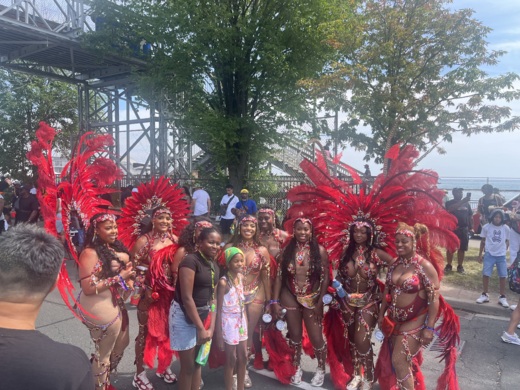
True to form, though, the bigger draw is the parade itself on Saturday, running from Toronto’s waterfront along Lake Shore Boulevard. The city really came alive with one of the biggest celebrations of Caribbean culture and independence, with an estimated 1.3 million people in attendance.
Speaking to one out-of-towner, Dwight Baron from Detroit remarked that the festival was a chance to experience his parents’ culture. “It has been an exciting time. People are dancing and loving life. It is also a chance to see some of the culture my parents grew up in.” However, he also remarked that the festival seemed a bit tame in comparison to last year’s. This might have been connected to the fact there was no gun violence or stampedes at the time of this report.

Allie and Serena, masqueraders from the Revellers band, were, however, quite annoyed with the level of organization on display at the festival this year. Specifically, Serena remarked that the issue of stormers had not been dealt with. Talking about how the road had been made narrower thanks to the closing off of Ontario Place and surrounding areas, it seemed that this had created a unique bottleneck where the last stretch of the parade was becoming congested with stormers waiting to crash towards the end of the parade. A suggestion from the pair was that the festival be spread out over several days, akin to how it is managed in Trinidad, with separate days strictly for masqueraders and another day that could serve as less restrictive, with public interaction expected. Allie also mentioned the exorbitant prices of the costumes this year, with prices for members of their band ranging from $600 to $1,000 but also acknowledged external issues like U.S. tariffs playing a part.
Now, even though there was a limit to outside musical influences, it is far from exclusionary, as many non-Caribbean vendors were present serving hungry attendees who had spent many hours in the sun, confirming that the Toronto Caribbean Carnival offers the chance for anyone to partake in Caribbean culture.
Stay in the loop with exclusive news, stories, and insights—delivered straight to your inbox. No fluff, just real content that matters. Sign up today!